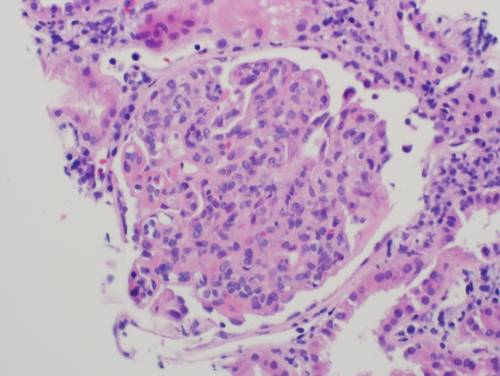
A 25 year-old male comes to the physician complaining of flank pain and hematuria. He says the pain is constant and dull. There is no frequency, urgency or dysuria. He has a history of mental retardation and seizures. On physical exam his blood pressure is 140/90 mm Hg, and his pulse is 80 bpm. He has multiple yellow papules across his nose and cheeks and numerous areas of blanched skin spots on his face. A 2-3 cm hypopigmented macule is noted on the right arm. CT scan of the head was done as patient presented with seizures. CT head was reported normal. CT scan of the abdomen shows bilateral hypodense fat containing renal masses and cysts.
What is the MOST likely diagnosis associated with these findings?
| A. Von Hippel Lindau | |
| B. Sturge Weber Syndrome | |
|
|
C. Tuberous Sclerosis |
| D. Osler Weber Rendu | |
| E. Neurofibromatosis type 2 |

Omitted
|
Copyright © ABIM Exam World
Created On: 09/13/2017
Last Modified: 12/30/2017
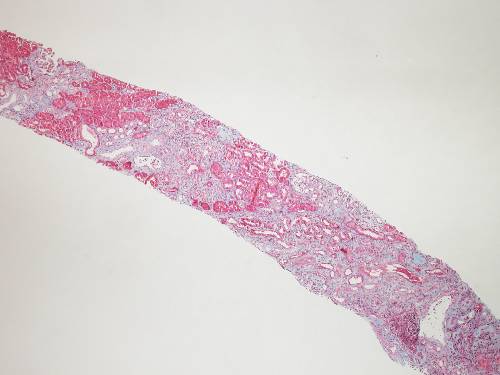
Cyclosporine nephrotoxicity in a renal transplant recipient is associated with all the below renal biopsy findings EXCEPT:
(THIS PICTURE BELOW IN LOW POWER SHOWS ONE OF THE CLASSICAL FINDINGS IN CSA TOXICITY)

| A. Interstitial Fibrosis | |
| B. Tubular atrophy | |
| C. Endothelial cell swelling | |
|
|
D. Glomerular thrombin deposits |
| E. Glomerular basement membrane thickening | |
|
|
F. Double contours of the GB |
|
|

Copyright © ABIM Exam World
Created On: 09/14/2017
Last Modified: 08/06/2018
A 25 year-old female is referred by her primary care provider for evaluation of hypertension and hypokalemia. The primary care provider has already started her on oral potassium, despite therapy her Potassium being 2.8 meq/L. Her blood pressure despite treatment with amlodipine and Lisinopril 154/96 mm of Hg. There is no renal bruit. Systemic and fundus examinations are normal. Her mother was also diagnosed with hypertension at an early age. Her brother died of a cerebrovascular accident 2 years ago. Laboratory findings are as follows:
Na 140
Potassium 2.8
Chloride 100
HCO3 26
BUN 15
Creatinine 0.8
Glucose 110
TSH and Cortisol are normal
ACTH elevated
Renin 0.7 (Low)
Aldosterone 48 (elevated)
Urinalysis:
Sodium 240 mEq/D
Potassium 98 mEq/D
Urinary 18-OH Cortisol and 18-oxocortisol are elevated.
The most appropriate treatment for this patient is:
|
|
A. Steroids |
| B. Spironolactone | |
|
|
C. Steroids + Spironolactone |
| D. Amiloride |
|
|
Copyright © ABIM Exam World
Created On: 09/20/2017
Last Modified: 08/06/2018
A 36 year-old female was diagnosed as having membranous nephropathy secondary to SLE. Her 24 hour protein excretion was 7.5 gms/day. Her serum creatinine was 0.9mg/dl. She was started on 500 mg of cyclophosphamide IV every 15 days (Euro-Lupus) and prednisolone 1 mg/kg orally per day. After 3 months of therapy, she presented with decreased urine output, puffiness of face, and oedema feet. On physical examination, her temperature is 37 C, blood pressure is 160/100 mm Hg, pulse is 90/min, and respiration rate is 20/min. She is anemic and there is puffiness of the face and oedema of the feet. On systemic examination air entry was decreased in the bases of both the lung fields and heart sounds are distant and feeble. Chest X-Ray reveals bilateral pleural effusions. Echocardiogram reveals mild to moderate pericardial effusion. Laboratory examination is as follows:
Hemoglobin 10.0 g/dL
Hematocrit 34%
Platelet Count 150,000 mm3
WBC 8,000 mm3
Differential count P 80% L 12% E 6% M 2%
ESR 50.8 mm/h
Urinalysis:
Protein 1450 mg/24 h
Glucose None
RBCs 70-80/HPF dysmorphic
WBCs 5-8/HPF
Leukocyte Esterase Negative
Nitrites Negative
BUN 35 mg/dL
Creatinine 3.9 mg/dL
Sodium 140 mEq/L
Potassium 5.2 mEq/L
Bicarbonate 15.5 mEq/L
Calcium 9.2 mEq/L
Phosphorus 5.6 mg/dL
Glucose 100 mg/dL
Uric Acid 5.3 mg/dL
C3 & C4 decreased
ANA positive
dsDNA positive
Repeat biopsy shows:

Which of the following is the most appropriate therapy for her current condition?
| A. Mycophenolate and steroid | |
|
|
B. Mycophenolate, tacrolimus and steroids |
| C. Rituximab | |
| D. I.V Immunoglobulins | |
| E. Plasma exchange |
Omitted
|
Copyright © ABIM Exam World
Created On: 09/20/2017
Last Modified: 08/06/2018
You are rounding on your patients in the dialysis unit and seeing a 65-year-old gentleman with ESRD due to chronic interstitial disease. He also has a history of diet-controlled diabetes mellitus and hypertension. His other past medical history is significant for dyslipidemia, coronary artery disease, hypothyroidism, gout and depression. He has been hospitalized in the recent past for swelling and pain of his right great toe. He was seen by the foot doctor, a scan was done and eventually the great toe had to be amputated. He has been on hemodialysis 3 times a week. His weekly Kt/V is 1.9. You are conducting the monthly blood work review for this patient. You note that his hemoglobin has been persistently low for past few monthly blood draws. He is currently on 100 mcg of Darbepoetin weekly on dialysis. On enquiry there is no history of blood loss in the form of hematemesis, melena, hematochezia or hemoptysis. His active medication list includes Losartan, Atorvastatin, Calcitriol, multivitamin supplements, paroxetine, allopurinol, aspirin.
His pertinent blood work is as follows:
Test | Result |
WBC | 4500 cells /cumm |
Hemoglobin | 8.2 g/dL |
Platelet count | 450 thousand /cumm |
Reticulocyte count | Normal |
Iron | 55 (range 50-150) |
Total iron binding capacity | 250 g/dl (range 250-310) |
Transferrin saturation | 20% |
Ferritin | 1400 ng/ml (range 20-235) |
Haptoglobin | 400 mg/dl (range 83-267) |
Lactate dehydrogenase | 240 U/L (range 80-225) |
Total bilirubin | 1.0 mg/dl |
Folate | 7 ng/ml (range 1.8-9.0) |
B12 | 500 pg/ml (range 200-800) |
Peripheral blood smear. | Normal RBC morphology, few burr cells. |
Which of the following is true about this patient’s anemia?
Omitted
|
Correct Answer: Option C: This patient has chronically inflamed state which is contributing to his anemia.
Explanation:
10-15% of patients who have been receiving erythrocyte estimating agents (ESA) develop resistance. There are multiple reasons why ESRD patients develop resistance.
ESA resistance occurs due to the following reasons:
Iron deficiency.
Chronic inflammation.
Under-dialysis.
Hemolysis.
Folate and B12 deficiency.
Chronic blood loss.
Anti EPO antibodies.
Pure red cell aplasia.
Failed chronic renal allograft.
ACEI/ARB.
Aluminum overload.
Hyperparathyroidism.
Hematological disorders or malignancy.
Option A: Incorrect option. ESRD is associated with erythropoietin deficiency. Patient has been initiated on ESA already. There is no point in measuring EPO levels. There is no evidence of measuring EPO levels in management of anemia in CKD.
Option B: Incorrect option. ESRD is an inflamed state. In inflammatory milieu there is increased production of Hepcidin. The hepatic iron-regulatory hormone Hepcidin and its receptor, the cellular iron exporter Ferroportin, constitute a feedback-regulated mechanism that maintains adequate plasma concentrations of iron-transferrin for erythropoiesis and other functions, ensures sufficient iron stores, and avoids iron toxicity. In chronic kidney disease, inflammation and impaired renal clearance increases plasma hepcidin, inhibiting duodenal iron absorption and sequestering iron in macrophages. These effects of hepcidin can cause systemic iron deficiency, decreased availability of iron for erythropoiesis, and resistance to endogenous and exogenous erythropoietin.
Choice C: Correct option. Refer explanation for option B. He had pain, swelling of his right great toe, a foot doctor sees him, a bone scan is done and subsequently the amputation. All suggestive of an infective etiology probably osteomyelitis.There is a temporal relationship between patients’ anemia and underlying chronic inflammatory state.
The high ferritin is also suggestive of inflamed state.
Choice D: Incorrect option. Pure red cell aplasia, a form of severe ESA hypo-responsiveness mediated by anti-erythropoietin antibodies, was first reported with certain formulations of Epoetin alfa but has now been reported with all commercially available forms of ESA. This syndrome presents with rapid onset of severe anemia (hemoglobin <7 g/dl), severe reticulocytopenia (reticulocyte count <10,000/?l) and marked elevations in serum ferritin level (>1000 ng/ml) and transferrin saturation (>70%) resulting from low iron utilization. Pure red cell aplasia is unlikely given the absence of characteristic laboratory findings. Moreover, the patient did not receive Epoetin alfa.
Choice E: Incorrect option. Under-dialysis leads to anemia due the same mechanism mentioned earlier in option B. Under-dialysis worsens the uremic milieu which in turn leads to inflammatory state. This leads to anemia. Patient in this clinical vignette has been dialysed appropriately. His weekly Kt/V is 1.9, which is above the target goal of 1.7
Copyright © ABIM Exam World
Created On: 10/22/2018
Last Modified: 04/17/2021
A 30-year-old man was on hemodialysis for 6 months. The was an IV drug user and was diagnosed to have HIV. His elder sister comes forward as protentional kidney donor for him. He underwent a successful kidney transplant. Which of the following statements is true regarding kidney transplantation in HIV positive individuals and acute rejection episodes?
|
|
A. The episodes of acute rejection are more in HIV positive individuals compared to non-HIV positive patients. |
| B. The episodes of acute rejection are same in HIV positive individuals when compared to age and disease matched non-HIV counterparts. | |
| C. Cyclosporine is a preferred CNI as it has some invitro antiviral properties. | |
| D. There is a documented interaction between CNI and integrase inhibitors. Integrase inhibitors increase the CNI level. | |
| E. There is a proven benefit of using rATG for induction immunosuppression over anti IL-2 therapy to prevent rejections. |
Omitted
|
Correct Answer. Option A. The episodes of acute rejection are more in HIV positive individuals compared to non-HIV positive patients.
Explanation.
Kidney transplant recipients with HIV have a high frequency of rejection. In a large, multicenter trial, one- and three-year rejection rates were 31 and 41 %, respectively, compared with an expected one-year rejection rate of 12 percent, as reported by SRTR for all kidney transplant recipients. At European transplant centers, where most patients are induced with interleukin (IL)-2 receptor antibodies, one-year, acute rejection rates among recipients with HIV have ranged from 15 to 44 %.
The higher rate of rejection in recipients with HIV is likely multifactorial. Drug-drug interactions between calcineurin inhibitors (CNIs) and protease inhibitors (PIs) can lead to subtherapeutic exposure to immunosuppressive agents. Patients on a CNI and PI require nonstandard dosing schedules (i.e. every other or every third day), which can make patient adherence difficult. Furthermore, concomitant administration of a PI and CNI results in a 40 % lower area under the curve (AUC) for CNI exposure at the same CNI target level, leading clinicians to systematically underdose patients taking both medications. Many transplant physicians seek to transition patients off PI-based regimens whenever possible in favor of integrase inhibitor-based regimens, which avoid these drug-drug interactions and permit standard immunosuppression dosing.
HIV-infected transplant recipients, compared with HIV-negative recipients, have a higher risk of acute rejection and, therefore, would theoretically benefit from antibody induction therapy. However, given the underlying immunosuppressed state of HIV-infected patients, prolonged lymphocyte depletion with antibody induction therapy could potentially increase their risk of developing opportunistic infections. Some centers avoid the use of antibody induction therapy among HIV-infected transplant recipients. In centers that use antibody induction therapy, some use basiliximab (an IL-2 receptor antibody) based upon data from two studies of HIV-infected kidney transplant recipients that demonstrated an increased risk of infection among those treated with rATG-Thymoglobulin. Other centers prefer to use rATG-Thymoglobulin given its superior efficacy in preventing acute rejection in HIV-negative recipients.
Copyright © ABIM Exam World
Created On: 05/12/2020
Last Modified: 01/28/2021
A 68-year-old Hispanic woman is referred to you for evaluation of nephrotic syndrome. She has history of type 2 diabetes and hypertension. Both diabetes and hypertension are well controlled. Her serum creatinine is 2.1 mg/dL. Urinalysis shows only proteinuria, and protein to creatinine ratio is 6. A renal biopsy shows amyloidosis and interstitial fibrosis. Based on the above history, biopsy findings, and proteinuria, which one of the following diagnostic tests you order to characterize the type of her amyloidosis?
| A. Electron microscopy of the glomerulus. | |
| B. Immunofluorescent studies. | |
| C. Immunofixation study. | |
|
|
D. Amyloidosis derived from leukocyte chemotactic factor 2 (ALECT 2). |
| E. No further testing. |
|
|
Correct Answer. Option D. Amyloidosis derived from leukocyte chemotactic factor 2 (ALECT 2).
Explanation.
ALECT2 amyloidosis is a systemic form of amyloidosis with predominantly renal and liver involvement. Most reported cases in North America (88 to 92 %) occur in older Hispanic adults of Mexican origin, although Punjabis, First Nations people in British Columbia, and Native Americans also have a predisposition for this disorder. In one study of renal amyloidosis among Egyptians, ALECT2 amyloidosis was the second most common form of renal amyloidosis behind AA and ahead of AL amyloidosis. Cases have also been reported in Pakistani, Sudanese, and Chinese patients. The pathogenesis of ALECT2 amyloidosis is not well understood. Patients typically present with chronic kidney disease (CKD) and variable proteinuria; nephrotic syndrome is uncommon. A kidney biopsy, preferably with laser microdissection and mass spectrometry, is required to make the diagnosis. Patients with ALECT2 amyloidosis characteristically have diffuse Congo red-positive amyloid deposition in the cortical interstitium, with variable glomerular and vascular involvement. In general, patients with ALECT2 amyloidosis have better overall survival than those with AL or AA amyloidosis, possibly due to the absence or rare occurrence of cardiac involvement. However, renal survival is relatively poor, with up to 39 percent of patients progressing to end-stage renal disease (ESRD). There are no specific therapies for ALECT2 amyloidosis.
Copyright © ABIM Exam World
Created On: 05/19/2020
Last Modified: 01/28/2021
A 25 year-old male comes to the physician complaining of flank pain and hematuria. He says the pain is constant and dull. There is no frequency, urgency or dysuria. He has a history of mental retardation and seizures. On physical exam his blood pressure is 140/90 mm Hg, and his pulse is 80 bpm. He has multiple yellow papules across his nose and cheeks and numerous areas of blanched skin spots on his face. A 2-3 cm hypopigmented macule is noted on the right arm. CT scan of the head was done as patient presented with seizures. CT head was reported normal. CT scan of the abdomen shows bilateral hypodense fat containing renal masses and cysts.
What is the MOST likely diagnosis associated with these findings?
| A. Von Hippel Lindau | |
| B. Sturge Weber Syndrome | |
|
|
C. Tuberous Sclerosis |
| D. Osler Weber Rendu | |
| E. Neurofibromatosis type 2 |
Omitted
|
Copyright © ABIM Exam World
Created On: 09/13/2017
Last Modified: 12/30/2017
Cyclosporine nephrotoxicity in a renal transplant recipient is associated with all the below renal biopsy findings EXCEPT:
(THIS PICTURE BELOW IN LOW POWER SHOWS ONE OF THE CLASSICAL FINDINGS IN CSA TOXICITY)

| A. Interstitial Fibrosis | |
| B. Tubular atrophy | |
| C. Endothelial cell swelling | |
|
|
D. Glomerular thrombin deposits |
| E. Glomerular basement membrane thickening | |
|
|
F. Double contours of the GB |
|
|

Copyright © ABIM Exam World
Created On: 09/14/2017
Last Modified: 08/06/2018
A 25 year-old female is referred by her primary care provider for evaluation of hypertension and hypokalemia. The primary care provider has already started her on oral potassium, despite therapy her Potassium being 2.8 meq/L. Her blood pressure despite treatment with amlodipine and Lisinopril 154/96 mm of Hg. There is no renal bruit. Systemic and fundus examinations are normal. Her mother was also diagnosed with hypertension at an early age. Her brother died of a cerebrovascular accident 2 years ago. Laboratory findings are as follows:
Na 140
Potassium 2.8
Chloride 100
HCO3 26
BUN 15
Creatinine 0.8
Glucose 110
TSH and Cortisol are normal
ACTH elevated
Renin 0.7 (Low)
Aldosterone 48 (elevated)
Urinalysis:
Sodium 240 mEq/D
Potassium 98 mEq/D
Urinary 18-OH Cortisol and 18-oxocortisol are elevated.
The most appropriate treatment for this patient is:
|
|
A. Steroids |
| B. Spironolactone | |
|
|
C. Steroids + Spironolactone |
| D. Amiloride |
|
|
Copyright © ABIM Exam World
Created On: 09/20/2017
Last Modified: 08/06/2018
A 36 year-old female was diagnosed as having membranous nephropathy secondary to SLE. Her 24 hour protein excretion was 7.5 gms/day. Her serum creatinine was 0.9mg/dl. She was started on 500 mg of cyclophosphamide IV every 15 days (Euro-Lupus) and prednisolone 1 mg/kg orally per day. After 3 months of therapy, she presented with decreased urine output, puffiness of face, and oedema feet. On physical examination, her temperature is 37 C, blood pressure is 160/100 mm Hg, pulse is 90/min, and respiration rate is 20/min. She is anemic and there is puffiness of the face and oedema of the feet. On systemic examination air entry was decreased in the bases of both the lung fields and heart sounds are distant and feeble. Chest X-Ray reveals bilateral pleural effusions. Echocardiogram reveals mild to moderate pericardial effusion. Laboratory examination is as follows:
Hemoglobin 10.0 g/dL
Hematocrit 34%
Platelet Count 150,000 mm3
WBC 8,000 mm3
Differential count P 80% L 12% E 6% M 2%
ESR 50.8 mm/h
Urinalysis:
Protein 1450 mg/24 h
Glucose None
RBCs 70-80/HPF dysmorphic
WBCs 5-8/HPF
Leukocyte Esterase Negative
Nitrites Negative
BUN 35 mg/dL
Creatinine 3.9 mg/dL
Sodium 140 mEq/L
Potassium 5.2 mEq/L
Bicarbonate 15.5 mEq/L
Calcium 9.2 mEq/L
Phosphorus 5.6 mg/dL
Glucose 100 mg/dL
Uric Acid 5.3 mg/dL
C3 & C4 decreased
ANA positive
dsDNA positive
Repeat biopsy shows:

Which of the following is the most appropriate therapy for her current condition?
| A. Mycophenolate and steroid | |
|
|
B. Mycophenolate, tacrolimus and steroids |
| C. Rituximab | |
| D. I.V Immunoglobulins | |
| E. Plasma exchange |
Omitted
|
Copyright © ABIM Exam World
Created On: 09/20/2017
Last Modified: 08/06/2018
You are rounding on your patients in the dialysis unit and seeing a 65-year-old gentleman with ESRD due to chronic interstitial disease. He also has a history of diet-controlled diabetes mellitus and hypertension. His other past medical history is significant for dyslipidemia, coronary artery disease, hypothyroidism, gout and depression. He has been hospitalized in the recent past for swelling and pain of his right great toe. He was seen by the foot doctor, a scan was done and eventually the great toe had to be amputated. He has been on hemodialysis 3 times a week. His weekly Kt/V is 1.9. You are conducting the monthly blood work review for this patient. You note that his hemoglobin has been persistently low for past few monthly blood draws. He is currently on 100 mcg of Darbepoetin weekly on dialysis. On enquiry there is no history of blood loss in the form of hematemesis, melena, hematochezia or hemoptysis. His active medication list includes Losartan, Atorvastatin, Calcitriol, multivitamin supplements, paroxetine, allopurinol, aspirin.
His pertinent blood work is as follows:
Test | Result |
WBC | 4500 cells /cumm |
Hemoglobin | 8.2 g/dL |
Platelet count | 450 thousand /cumm |
Reticulocyte count | Normal |
Iron | 55 (range 50-150) |
Total iron binding capacity | 250 g/dl (range 250-310) |
Transferrin saturation | 20% |
Ferritin | 1400 ng/ml (range 20-235) |
Haptoglobin | 400 mg/dl (range 83-267) |
Lactate dehydrogenase | 240 U/L (range 80-225) |
Total bilirubin | 1.0 mg/dl |
Folate | 7 ng/ml (range 1.8-9.0) |
B12 | 500 pg/ml (range 200-800) |
Peripheral blood smear. | Normal RBC morphology, few burr cells. |
Which of the following is true about this patient’s anemia?
Omitted
|
Correct Answer: Option C: This patient has chronically inflamed state which is contributing to his anemia.
Explanation:
10-15% of patients who have been receiving erythrocyte estimating agents (ESA) develop resistance. There are multiple reasons why ESRD patients develop resistance.
ESA resistance occurs due to the following reasons:
Iron deficiency.
Chronic inflammation.
Under-dialysis.
Hemolysis.
Folate and B12 deficiency.
Chronic blood loss.
Anti EPO antibodies.
Pure red cell aplasia.
Failed chronic renal allograft.
ACEI/ARB.
Aluminum overload.
Hyperparathyroidism.
Hematological disorders or malignancy.
Option A: Incorrect option. ESRD is associated with erythropoietin deficiency. Patient has been initiated on ESA already. There is no point in measuring EPO levels. There is no evidence of measuring EPO levels in management of anemia in CKD.
Option B: Incorrect option. ESRD is an inflamed state. In inflammatory milieu there is increased production of Hepcidin. The hepatic iron-regulatory hormone Hepcidin and its receptor, the cellular iron exporter Ferroportin, constitute a feedback-regulated mechanism that maintains adequate plasma concentrations of iron-transferrin for erythropoiesis and other functions, ensures sufficient iron stores, and avoids iron toxicity. In chronic kidney disease, inflammation and impaired renal clearance increases plasma hepcidin, inhibiting duodenal iron absorption and sequestering iron in macrophages. These effects of hepcidin can cause systemic iron deficiency, decreased availability of iron for erythropoiesis, and resistance to endogenous and exogenous erythropoietin.
Choice C: Correct option. Refer explanation for option B. He had pain, swelling of his right great toe, a foot doctor sees him, a bone scan is done and subsequently the amputation. All suggestive of an infective etiology probably osteomyelitis.There is a temporal relationship between patients’ anemia and underlying chronic inflammatory state.
The high ferritin is also suggestive of inflamed state.
Choice D: Incorrect option. Pure red cell aplasia, a form of severe ESA hypo-responsiveness mediated by anti-erythropoietin antibodies, was first reported with certain formulations of Epoetin alfa but has now been reported with all commercially available forms of ESA. This syndrome presents with rapid onset of severe anemia (hemoglobin <7 g/dl), severe reticulocytopenia (reticulocyte count <10,000/?l) and marked elevations in serum ferritin level (>1000 ng/ml) and transferrin saturation (>70%) resulting from low iron utilization. Pure red cell aplasia is unlikely given the absence of characteristic laboratory findings. Moreover, the patient did not receive Epoetin alfa.
Choice E: Incorrect option. Under-dialysis leads to anemia due the same mechanism mentioned earlier in option B. Under-dialysis worsens the uremic milieu which in turn leads to inflammatory state. This leads to anemia. Patient in this clinical vignette has been dialysed appropriately. His weekly Kt/V is 1.9, which is above the target goal of 1.7
Copyright © ABIM Exam World
Created On: 10/22/2018
Last Modified: 04/17/2021
A 30-year-old man was on hemodialysis for 6 months. The was an IV drug user and was diagnosed to have HIV. His elder sister comes forward as protentional kidney donor for him. He underwent a successful kidney transplant. Which of the following statements is true regarding kidney transplantation in HIV positive individuals and acute rejection episodes?
|
|
A. The episodes of acute rejection are more in HIV positive individuals compared to non-HIV positive patients. |
| B. The episodes of acute rejection are same in HIV positive individuals when compared to age and disease matched non-HIV counterparts. | |
| C. Cyclosporine is a preferred CNI as it has some invitro antiviral properties. | |
| D. There is a documented interaction between CNI and integrase inhibitors. Integrase inhibitors increase the CNI level. | |
| E. There is a proven benefit of using rATG for induction immunosuppression over anti IL-2 therapy to prevent rejections. |
Omitted
|
Correct Answer. Option A. The episodes of acute rejection are more in HIV positive individuals compared to non-HIV positive patients.
Explanation.
Kidney transplant recipients with HIV have a high frequency of rejection. In a large, multicenter trial, one- and three-year rejection rates were 31 and 41 %, respectively, compared with an expected one-year rejection rate of 12 percent, as reported by SRTR for all kidney transplant recipients. At European transplant centers, where most patients are induced with interleukin (IL)-2 receptor antibodies, one-year, acute rejection rates among recipients with HIV have ranged from 15 to 44 %.
The higher rate of rejection in recipients with HIV is likely multifactorial. Drug-drug interactions between calcineurin inhibitors (CNIs) and protease inhibitors (PIs) can lead to subtherapeutic exposure to immunosuppressive agents. Patients on a CNI and PI require nonstandard dosing schedules (i.e. every other or every third day), which can make patient adherence difficult. Furthermore, concomitant administration of a PI and CNI results in a 40 % lower area under the curve (AUC) for CNI exposure at the same CNI target level, leading clinicians to systematically underdose patients taking both medications. Many transplant physicians seek to transition patients off PI-based regimens whenever possible in favor of integrase inhibitor-based regimens, which avoid these drug-drug interactions and permit standard immunosuppression dosing.
HIV-infected transplant recipients, compared with HIV-negative recipients, have a higher risk of acute rejection and, therefore, would theoretically benefit from antibody induction therapy. However, given the underlying immunosuppressed state of HIV-infected patients, prolonged lymphocyte depletion with antibody induction therapy could potentially increase their risk of developing opportunistic infections. Some centers avoid the use of antibody induction therapy among HIV-infected transplant recipients. In centers that use antibody induction therapy, some use basiliximab (an IL-2 receptor antibody) based upon data from two studies of HIV-infected kidney transplant recipients that demonstrated an increased risk of infection among those treated with rATG-Thymoglobulin. Other centers prefer to use rATG-Thymoglobulin given its superior efficacy in preventing acute rejection in HIV-negative recipients.
Copyright © ABIM Exam World
Created On: 05/12/2020
Last Modified: 01/28/2021
A 68-year-old Hispanic woman is referred to you for evaluation of nephrotic syndrome. She has history of type 2 diabetes and hypertension. Both diabetes and hypertension are well controlled. Her serum creatinine is 2.1 mg/dL. Urinalysis shows only proteinuria, and protein to creatinine ratio is 6. A renal biopsy shows amyloidosis and interstitial fibrosis. Based on the above history, biopsy findings, and proteinuria, which one of the following diagnostic tests you order to characterize the type of her amyloidosis?
| A. Electron microscopy of the glomerulus. | |
| B. Immunofluorescent studies. | |
| C. Immunofixation study. | |
|
|
D. Amyloidosis derived from leukocyte chemotactic factor 2 (ALECT 2). |
| E. No further testing. |
|
|
Correct Answer. Option D. Amyloidosis derived from leukocyte chemotactic factor 2 (ALECT 2).
Explanation.
ALECT2 amyloidosis is a systemic form of amyloidosis with predominantly renal and liver involvement. Most reported cases in North America (88 to 92 %) occur in older Hispanic adults of Mexican origin, although Punjabis, First Nations people in British Columbia, and Native Americans also have a predisposition for this disorder. In one study of renal amyloidosis among Egyptians, ALECT2 amyloidosis was the second most common form of renal amyloidosis behind AA and ahead of AL amyloidosis. Cases have also been reported in Pakistani, Sudanese, and Chinese patients. The pathogenesis of ALECT2 amyloidosis is not well understood. Patients typically present with chronic kidney disease (CKD) and variable proteinuria; nephrotic syndrome is uncommon. A kidney biopsy, preferably with laser microdissection and mass spectrometry, is required to make the diagnosis. Patients with ALECT2 amyloidosis characteristically have diffuse Congo red-positive amyloid deposition in the cortical interstitium, with variable glomerular and vascular involvement. In general, patients with ALECT2 amyloidosis have better overall survival than those with AL or AA amyloidosis, possibly due to the absence or rare occurrence of cardiac involvement. However, renal survival is relatively poor, with up to 39 percent of patients progressing to end-stage renal disease (ESRD). There are no specific therapies for ALECT2 amyloidosis.
Copyright © ABIM Exam World
Created On: 05/19/2020
Last Modified: 01/28/2021
A 25 year-old male comes to the physician complaining of flank pain and hematuria. He says the pain is constant and dull. There is no frequency, urgency or dysuria. He has a history of mental retardation and seizures. On physical exam his blood pressure is 140/90 mm Hg, and his pulse is 80 bpm. He has multiple yellow papules across his nose and cheeks and numerous areas of blanched skin spots on his face. A 2-3 cm hypopigmented macule is noted on the right arm. CT scan of the head was done as patient presented with seizures. CT head was reported normal. CT scan of the abdomen shows bilateral hypodense fat containing renal masses and cysts.
What is the MOST likely diagnosis associated with these findings?
| A. Von Hippel Lindau | |
| B. Sturge Weber Syndrome | |
|
|
C. Tuberous Sclerosis |
| D. Osler Weber Rendu | |
| E. Neurofibromatosis type 2 |
Omitted
|
Copyright © ABIM Exam World
Created On: 09/13/2017
Last Modified: 12/30/2017
Cyclosporine nephrotoxicity in a renal transplant recipient is associated with all the below renal biopsy findings EXCEPT:
(THIS PICTURE BELOW IN LOW POWER SHOWS ONE OF THE CLASSICAL FINDINGS IN CSA TOXICITY)

| A. Interstitial Fibrosis | |
| B. Tubular atrophy | |
| C. Endothelial cell swelling | |
|
|
D. Glomerular thrombin deposits |
| E. Glomerular basement membrane thickening | |
|
|
F. Double contours of the GB |
|
|

Copyright © ABIM Exam World
Created On: 09/14/2017
Last Modified: 08/06/2018
A 25 year-old female is referred by her primary care provider for evaluation of hypertension and hypokalemia. The primary care provider has already started her on oral potassium, despite therapy her Potassium being 2.8 meq/L. Her blood pressure despite treatment with amlodipine and Lisinopril 154/96 mm of Hg. There is no renal bruit. Systemic and fundus examinations are normal. Her mother was also diagnosed with hypertension at an early age. Her brother died of a cerebrovascular accident 2 years ago. Laboratory findings are as follows:
Na 140
Potassium 2.8
Chloride 100
HCO3 26
BUN 15
Creatinine 0.8
Glucose 110
TSH and Cortisol are normal
ACTH elevated
Renin 0.7 (Low)
Aldosterone 48 (elevated)
Urinalysis:
Sodium 240 mEq/D
Potassium 98 mEq/D
Urinary 18-OH Cortisol and 18-oxocortisol are elevated.
The most appropriate treatment for this patient is:
|
|
A. Steroids |
| B. Spironolactone | |
|
|
C. Steroids + Spironolactone |
| D. Amiloride |
|
|
Copyright © ABIM Exam World
Created On: 09/20/2017
Last Modified: 08/06/2018
A 36 year-old female was diagnosed as having membranous nephropathy secondary to SLE. Her 24 hour protein excretion was 7.5 gms/day. Her serum creatinine was 0.9mg/dl. She was started on 500 mg of cyclophosphamide IV every 15 days (Euro-Lupus) and prednisolone 1 mg/kg orally per day. After 3 months of therapy, she presented with decreased urine output, puffiness of face, and oedema feet. On physical examination, her temperature is 37 C, blood pressure is 160/100 mm Hg, pulse is 90/min, and respiration rate is 20/min. She is anemic and there is puffiness of the face and oedema of the feet. On systemic examination air entry was decreased in the bases of both the lung fields and heart sounds are distant and feeble. Chest X-Ray reveals bilateral pleural effusions. Echocardiogram reveals mild to moderate pericardial effusion. Laboratory examination is as follows:
Hemoglobin 10.0 g/dL
Hematocrit 34%
Platelet Count 150,000 mm3
WBC 8,000 mm3
Differential count P 80% L 12% E 6% M 2%
ESR 50.8 mm/h
Urinalysis:
Protein 1450 mg/24 h
Glucose None
RBCs 70-80/HPF dysmorphic
WBCs 5-8/HPF
Leukocyte Esterase Negative
Nitrites Negative
BUN 35 mg/dL
Creatinine 3.9 mg/dL
Sodium 140 mEq/L
Potassium 5.2 mEq/L
Bicarbonate 15.5 mEq/L
Calcium 9.2 mEq/L
Phosphorus 5.6 mg/dL
Glucose 100 mg/dL
Uric Acid 5.3 mg/dL
C3 & C4 decreased
ANA positive
dsDNA positive
Repeat biopsy shows:

Which of the following is the most appropriate therapy for her current condition?
| A. Mycophenolate and steroid | |
|
|
B. Mycophenolate, tacrolimus and steroids |
| C. Rituximab | |
| D. I.V Immunoglobulins | |
| E. Plasma exchange |
Omitted
|
Copyright © ABIM Exam World
Created On: 09/20/2017
Last Modified: 08/06/2018
You are rounding on your patients in the dialysis unit and seeing a 65-year-old gentleman with ESRD due to chronic interstitial disease. He also has a history of diet-controlled diabetes mellitus and hypertension. His other past medical history is significant for dyslipidemia, coronary artery disease, hypothyroidism, gout and depression. He has been hospitalized in the recent past for swelling and pain of his right great toe. He was seen by the foot doctor, a scan was done and eventually the great toe had to be amputated. He has been on hemodialysis 3 times a week. His weekly Kt/V is 1.9. You are conducting the monthly blood work review for this patient. You note that his hemoglobin has been persistently low for past few monthly blood draws. He is currently on 100 mcg of Darbepoetin weekly on dialysis. On enquiry there is no history of blood loss in the form of hematemesis, melena, hematochezia or hemoptysis. His active medication list includes Losartan, Atorvastatin, Calcitriol, multivitamin supplements, paroxetine, allopurinol, aspirin.
His pertinent blood work is as follows:
Test | Result |
WBC | 4500 cells /cumm |
Hemoglobin | 8.2 g/dL |
Platelet count | 450 thousand /cumm |
Reticulocyte count | Normal |
Iron | 55 (range 50-150) |
Total iron binding capacity | 250 g/dl (range 250-310) |
Transferrin saturation | 20% |
Ferritin | 1400 ng/ml (range 20-235) |
Haptoglobin | 400 mg/dl (range 83-267) |
Lactate dehydrogenase | 240 U/L (range 80-225) |
Total bilirubin | 1.0 mg/dl |
Folate | 7 ng/ml (range 1.8-9.0) |
B12 | 500 pg/ml (range 200-800) |
Peripheral blood smear. | Normal RBC morphology, few burr cells. |
Which of the following is true about this patient’s anemia?
Omitted
|
Correct Answer: Option C: This patient has chronically inflamed state which is contributing to his anemia.
Explanation:
10-15% of patients who have been receiving erythrocyte estimating agents (ESA) develop resistance. There are multiple reasons why ESRD patients develop resistance.
ESA resistance occurs due to the following reasons:
Iron deficiency.
Chronic inflammation.
Under-dialysis.
Hemolysis.
Folate and B12 deficiency.
Chronic blood loss.
Anti EPO antibodies.
Pure red cell aplasia.
Failed chronic renal allograft.
ACEI/ARB.
Aluminum overload.
Hyperparathyroidism.
Hematological disorders or malignancy.
Option A: Incorrect option. ESRD is associated with erythropoietin deficiency. Patient has been initiated on ESA already. There is no point in measuring EPO levels. There is no evidence of measuring EPO levels in management of anemia in CKD.
Option B: Incorrect option. ESRD is an inflamed state. In inflammatory milieu there is increased production of Hepcidin. The hepatic iron-regulatory hormone Hepcidin and its receptor, the cellular iron exporter Ferroportin, constitute a feedback-regulated mechanism that maintains adequate plasma concentrations of iron-transferrin for erythropoiesis and other functions, ensures sufficient iron stores, and avoids iron toxicity. In chronic kidney disease, inflammation and impaired renal clearance increases plasma hepcidin, inhibiting duodenal iron absorption and sequestering iron in macrophages. These effects of hepcidin can cause systemic iron deficiency, decreased availability of iron for erythropoiesis, and resistance to endogenous and exogenous erythropoietin.
Choice C: Correct option. Refer explanation for option B. He had pain, swelling of his right great toe, a foot doctor sees him, a bone scan is done and subsequently the amputation. All suggestive of an infective etiology probably osteomyelitis.There is a temporal relationship between patients’ anemia and underlying chronic inflammatory state.
The high ferritin is also suggestive of inflamed state.
Choice D: Incorrect option. Pure red cell aplasia, a form of severe ESA hypo-responsiveness mediated by anti-erythropoietin antibodies, was first reported with certain formulations of Epoetin alfa but has now been reported with all commercially available forms of ESA. This syndrome presents with rapid onset of severe anemia (hemoglobin <7 g/dl), severe reticulocytopenia (reticulocyte count <10,000/?l) and marked elevations in serum ferritin level (>1000 ng/ml) and transferrin saturation (>70%) resulting from low iron utilization. Pure red cell aplasia is unlikely given the absence of characteristic laboratory findings. Moreover, the patient did not receive Epoetin alfa.
Choice E: Incorrect option. Under-dialysis leads to anemia due the same mechanism mentioned earlier in option B. Under-dialysis worsens the uremic milieu which in turn leads to inflammatory state. This leads to anemia. Patient in this clinical vignette has been dialysed appropriately. His weekly Kt/V is 1.9, which is above the target goal of 1.7
Copyright © ABIM Exam World
Created On: 10/22/2018
Last Modified: 04/17/2021
A 30-year-old man was on hemodialysis for 6 months. The was an IV drug user and was diagnosed to have HIV. His elder sister comes forward as protentional kidney donor for him. He underwent a successful kidney transplant. Which of the following statements is true regarding kidney transplantation in HIV positive individuals and acute rejection episodes?
|
|
A. The episodes of acute rejection are more in HIV positive individuals compared to non-HIV positive patients. |
| B. The episodes of acute rejection are same in HIV positive individuals when compared to age and disease matched non-HIV counterparts. | |
| C. Cyclosporine is a preferred CNI as it has some invitro antiviral properties. | |
| D. There is a documented interaction between CNI and integrase inhibitors. Integrase inhibitors increase the CNI level. | |
| E. There is a proven benefit of using rATG for induction immunosuppression over anti IL-2 therapy to prevent rejections. |
Omitted
|
Correct Answer. Option A. The episodes of acute rejection are more in HIV positive individuals compared to non-HIV positive patients.
Explanation.
Kidney transplant recipients with HIV have a high frequency of rejection. In a large, multicenter trial, one- and three-year rejection rates were 31 and 41 %, respectively, compared with an expected one-year rejection rate of 12 percent, as reported by SRTR for all kidney transplant recipients. At European transplant centers, where most patients are induced with interleukin (IL)-2 receptor antibodies, one-year, acute rejection rates among recipients with HIV have ranged from 15 to 44 %.
The higher rate of rejection in recipients with HIV is likely multifactorial. Drug-drug interactions between calcineurin inhibitors (CNIs) and protease inhibitors (PIs) can lead to subtherapeutic exposure to immunosuppressive agents. Patients on a CNI and PI require nonstandard dosing schedules (i.e. every other or every third day), which can make patient adherence difficult. Furthermore, concomitant administration of a PI and CNI results in a 40 % lower area under the curve (AUC) for CNI exposure at the same CNI target level, leading clinicians to systematically underdose patients taking both medications. Many transplant physicians seek to transition patients off PI-based regimens whenever possible in favor of integrase inhibitor-based regimens, which avoid these drug-drug interactions and permit standard immunosuppression dosing.
HIV-infected transplant recipients, compared with HIV-negative recipients, have a higher risk of acute rejection and, therefore, would theoretically benefit from antibody induction therapy. However, given the underlying immunosuppressed state of HIV-infected patients, prolonged lymphocyte depletion with antibody induction therapy could potentially increase their risk of developing opportunistic infections. Some centers avoid the use of antibody induction therapy among HIV-infected transplant recipients. In centers that use antibody induction therapy, some use basiliximab (an IL-2 receptor antibody) based upon data from two studies of HIV-infected kidney transplant recipients that demonstrated an increased risk of infection among those treated with rATG-Thymoglobulin. Other centers prefer to use rATG-Thymoglobulin given its superior efficacy in preventing acute rejection in HIV-negative recipients.
Copyright © ABIM Exam World
Created On: 05/12/2020
Last Modified: 01/28/2021
A 68-year-old Hispanic woman is referred to you for evaluation of nephrotic syndrome. She has history of type 2 diabetes and hypertension. Both diabetes and hypertension are well controlled. Her serum creatinine is 2.1 mg/dL. Urinalysis shows only proteinuria, and protein to creatinine ratio is 6. A renal biopsy shows amyloidosis and interstitial fibrosis. Based on the above history, biopsy findings, and proteinuria, which one of the following diagnostic tests you order to characterize the type of her amyloidosis?
| A. Electron microscopy of the glomerulus. | |
| B. Immunofluorescent studies. | |
| C. Immunofixation study. | |
|
|
D. Amyloidosis derived from leukocyte chemotactic factor 2 (ALECT 2). |
| E. No further testing. |
|
|
Correct Answer. Option D. Amyloidosis derived from leukocyte chemotactic factor 2 (ALECT 2).
Explanation.
ALECT2 amyloidosis is a systemic form of amyloidosis with predominantly renal and liver involvement. Most reported cases in North America (88 to 92 %) occur in older Hispanic adults of Mexican origin, although Punjabis, First Nations people in British Columbia, and Native Americans also have a predisposition for this disorder. In one study of renal amyloidosis among Egyptians, ALECT2 amyloidosis was the second most common form of renal amyloidosis behind AA and ahead of AL amyloidosis. Cases have also been reported in Pakistani, Sudanese, and Chinese patients. The pathogenesis of ALECT2 amyloidosis is not well understood. Patients typically present with chronic kidney disease (CKD) and variable proteinuria; nephrotic syndrome is uncommon. A kidney biopsy, preferably with laser microdissection and mass spectrometry, is required to make the diagnosis. Patients with ALECT2 amyloidosis characteristically have diffuse Congo red-positive amyloid deposition in the cortical interstitium, with variable glomerular and vascular involvement. In general, patients with ALECT2 amyloidosis have better overall survival than those with AL or AA amyloidosis, possibly due to the absence or rare occurrence of cardiac involvement. However, renal survival is relatively poor, with up to 39 percent of patients progressing to end-stage renal disease (ESRD). There are no specific therapies for ALECT2 amyloidosis.
Copyright © ABIM Exam World
Created On: 05/19/2020
Last Modified: 01/28/2021
Do you want to end this review?