Multiple
  • Test Id: 1906965907460801d6
  • QId: 167340
  • 1 of 39
  • Notes
  • Calculator
  • Feedback

A 40 year-old pleasant African man with ESRD secondary to FSGS started automated peritoneal dialysis. His prescription includes 2.5 L and 3 exchanges over 8 hours at night with a last fill of 2 L. He has a urine output of 1000 mL/day. A typical ultrafiltration on cycler is used at 1000 mL. Average drain volume of the day dwell was 1500 mL prior to going on the cycler at night. 

He came with complains of lower abdominal wall edema extending to the scrotum over the past 5 days. Without any change in the dialysis prescription, his drain volume before going on the cycler dropped to 900 mL, and the ultrafiltration volume on the cycler came down to 100 mL. He reports no pain with fill or drain. 

What is the next step?


A. Chest X ray PA and lateral view 
B. Drain the fluid middle of the day to reduce the dwell time
C. PD catheter manipulation
D. Abdominal CT scan with contrast in the dialysate
E. Switch to hemodialysis 
F. Pleurodesis 
Incorrect
The correct answer is D 

Abdominal CT scan with contrast in the dialysate

Explanation:

Typical ultrafiltration failure from peritoneal membrane failure presents gradually. More frequently, we see an apparent ultrafiltration failure from other reasons. 

Catheter malfunction can present with problem with inflow, outflow or both. A kink in the catheter poses problem with inflow and outflow. 

Omentum or blood clots clogging the catheter can cause only outflow problem. Fibrin clots, constipation with loaded rectum, and displaced PD catheter also cause outflow obstruction. X ray KUB is very helpful in diagnosing displaced catheter.   

FLUID LEAK leak into the abdominal wall causes swelling in the lower abdomen extending down to the scrotum or mons pubis and decrease in the drain volume. Usually this can be treated by temporarily doing low volume PD or transferring to HD for about 6 weeks. Such leaks starting few years after initiating PD usually do not respond to this approach and often requires placement of a new PD catheter.

A patent tunica vaginalis testes will cause UNILATERAL OR BILATERAL SCROTAL SWELLING without much swelling of the abdominal wall sometimes associated with decrease in the drain volume. A CT scan of the abdomen with ‘IV’ contrast into the peritoneal fluid can help in diagnosing the leak into the abdominal wall and scrotal leak. Patent tunica vaginalis testes requires surgery. Generally hemodialysis is not required after the surgery and low volume peritoneal dialysis can be resumed. This patient presents with signs of leak of fluid into the abdominal wall. A chest X ray is not required, so (Choice A) is wrong.

Draining during the middle of the day helps if the membrane is very permeable with very high D/P creatinine ratio on PET. This does not help in abdominal wall leak of dialysate. Therefore, (Choice B) is also wrong.

PD catheter manipulation (Choice C) is wrong because this patient does not have displaced PD catheter from the information given.

(Choice D) is the correct answer. If the clinical presentation is very convincing, most patients are treated with reducing the dialysate volume and if possible keeping the abdomen dry during the day. Sometimes these patients need to be switched to hemodialysis for 4-6 weeks before PD is resumed. Hence temporary switch to HD would be a correct answer, but unqualified switch to HD as is stated in answer E would be a wrong choice. Therefore, (Choice E) is the wrong or less appropriate answer.

ABDOMINAL ADHESIONS cause decrease in the drain volume as well and require surgical treatment with low volume PD or temporary HD after that.

DIAPHRAGMATIC LEAK into the pleural space presents with cough and shortness of breath without peripheral signs of fluid overload few weeks after starting peritoneal dialysis (not the presentation in this patient). Usually, such patients present with right sided pleural effusion clinically and on chest X ray PA and lateral view. These patients can be treated with temporary transfer to HD, pleuridesis and return back to PD 4-6 weeks later. Permanent switch to hemoidialysis without pleurodesis is another option.


TREATMENT OPTIONS OF VARIOUS ABDOMINAL/CHEST PROBLEMS AS MENTIONED ABOVE IN PATIENTS ON PERITONEAL DIALYSIS IS FREQUENTLY TESTED ON BOARDS. PLEASE KNOW THE TREATMENT OPTIONS.


Copyright © ABIM Exam World
Created On: 09/14/2017
Last Modified: 08/06/2018
End

Next
Multiple
  • Test Id: 1906965907460801d6
  • QId: 167345
  • 2 of 39
  • Notes
  • Calculator
  • Feedback

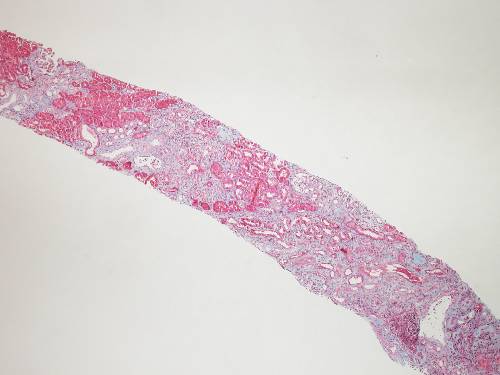
Cyclosporine nephrotoxicity in a renal transplant recipient is associated with all the below renal biopsy findings EXCEPT:

(THIS PICTURE BELOW IN LOW POWER SHOWS ONE OF THE CLASSICAL FINDINGS IN CSA TOXICITY)


A. Interstitial Fibrosis  
B. Tubular atrophy 
C. Endothelial cell swelling 
D. Glomerular thrombin deposits
E. Glomerular basement membrane thickening 
F. Double contours of the GB 
Incorrect
The correct answer is D

Glomerular thrombin deposits

Explanation:

In a patient with suspected cyclosporine nephrotoxicity, the renal biopsy reveals an obliterative arteriolopathy (which is classically seen in afferent renal arterioles) suggesting primary endothelial damage and subsequently endothelial cell swelling which may persist for months in a patient with elevated cyclosporine blood levels. This is also associated with thickened glomerular basement membrane and double contour pattern. In fact according to BANF thickened glomerular basement membrane and double contour pattern is most suggestive of chronic allograft nephropathy (CAN) also called as TRANSPLANT GLOMERULOPATHY. 

The other renal biopsy findings of cyclosporine nephrotoxicity include ischemic collapse or scarring of the glomeruli, vacuolization of the tubules, FSGS, and focal areas of tubular atrophy and interstitial fibrosis (producing a picture of “ZEBRA” or "STRIPED" fibrosis) These changes are seen with both low-dose and higher-dose cyclosporine therapy, although they seem to co-relate earlier with higher doses. 

(THE ABOVE PICTURE IN THE UPPER HALF SHOWS TUBULAR ATROPHY APPEARING DARK AND REDDISH ALTERNATING WITH LIGHT BLUE AREAS OF INTERSTITIAL FIBROSIS GIVING A "STRIPED" OR "ZEBRA" APPEARANCE)

THE PICTURE BELOW SHOWS TUBULAR ATROPHY, VACUOLIZATION OF THE TUBULES AND ISCHEMIC CHANGES:


Mild arteriolar hyalinosis at six months appears to be associated with high doses of cyclosporine and was reversible. However, after more than a year irreversible severe arteriolar hyalinosis and glomerulosclerosis were observed, despite decreased doses and trough levels of cyclosporine.

Glomerular thrombin deposits are typically seen in patients with Lupus, anti phospholipid syndromes and other vasculitides. It is typically not seen in cyclosporine nephrotoxicity.

Copyright © ABIM Exam World
Created On: 09/14/2017
Last Modified: 08/06/2018

End

Previous Next
Multiple
  • Test Id: 1906965907460801d6
  • QId: 167347
  • 3 of 39
  • Notes
  • Calculator
  • Feedback

A 68 year-old African American male with known history of diabetes mellitus,  hyperlipidemia, CVD, and GERD presents to the ER with chest pain and shortness of breath. Patient says the pain is a crushing pain and radiating to his left arm. It woke him from sleep 30 minutes ago. He took his antacids and 4 tablets of nitroglycerin, and the pain got better. His current medications include low dose aspirin, metoprolol, glyburide, pioglitazone, lisinopril, simvastatin, and omeprazole. He recently suffered an upper respiratory infection for which he was given Levofloxacin. Vitals show: BP 160/95 mm Hg, T 98.1, and HR 110. He has no edema legs and no jugular venous distention. EKG shows LVH by voltage criteria with isoelectric ST segment. Serial troponin levels are normal. A stress test showed evidence of stress inducible ischemia in the anterior leads. He is scheduled for cardiac catheterization the next day. Laboratory results are as follows:

Serum Chemistry:

Na   143 mEq/L

K   3.5 mEq/L

Cl   101 mEq/L

HCO3  22 mEq/L

BUN   35 mg/dL

Cr   3.0 mg/dL

Glucose  110 mg/dL 

What would you do to PROTECT the kidneys before doing the cardiac catheterization?

A. Dopamine IV infusion before and after the  procedure.
B. Nifedipine.
C. Isotonic sodium bicarbonate infusion before and after the procedure.
D. N Acetyl Cysteine before and after the procedure
E. Start mannitol IV before the procedure
F. Left ventriculogram quickly with coronary angiogram
Correct
The correct answer is C

Isotonic sodium bicarbonate infusion before and after the procedure. N acetyl cysteine is also used but efficacy in studies is unproven.

Explanation:

Contrast nephropathy usually presents as rise in creatinine 24-48 hrs after exposure to IV radio-contrast.

Other features of CONTRAST NEPHROPATHY are:
  • Low fractional excretion of sodium (FeNa) below 1%.
  • Iodinated contrast agents test false positive for protein and hence proteinuria gets overestimated
  • It is reversible most of the time
  • UA may show muddy brown granular casts, tubular epithelial cell casts and numerous tubular epithelial casts.

Contrast associated nephropathy has to be differentiated from atheroembolic disease which presents with deterioration in kidney function days to weeks after the procedure,  embolic lesions (such as digital ischemia of the toes) or livedo reticularis, transient eosinophilia and hypocomplementemia,  protracted course with frequently little or no recovery of renal function, and kidney biopsy showing the typical biconvex, needle-shaped clefts ("ghosts") within the occluded vessel from the space occupied by the cholesterol crystal that dissolves during the processing of the tissue giving a ‘fish mouth’ appearance.

(Choice A) There is no evidence to support that dopamine infusion is beneficial. In fact, it may be harmful.

(Choice B) There is no evidence to support that nifedipine is beneficial.

(Choice C) There are studies to suggest that infusion of isotonic saline or half normal saline may be beneficial. Since alkalization may protect against free radical injury, the possibility that sodium bicarbonate may be superior to isotonic saline. In patients who tolerate extra volume (i.e. those who are not volume overloaded or those who are not in heart failure) it would be reasonable to infuse isotonic sodium bicarbonate or saline.

(Choice D) There are studies to suggest that oral N acetyl cysteine before and after the procedure to reduce the risk of contrast nephropathy is beneficial. There are also studies to suggest that this is not beneficial. N acetyl is believed to function by its vasodilator effect and antioxidant effect. Considering that N Acetyl cysteine is safe and cheap, many physicians would administer it prophylactically as well even though results are conflicting. 

(Choice E) There are studies to suggest that prophylactic mannitol or furosemide is harmful.
    
(Choice F) Left ventriculogram should be avoided in patients at high risk of developing contrast nephropathy to minimize the quantity of IV contrast needed.

RISK FACTORS - for contrast nephropathy are :
  • Chronic kidney disease
  • Diabetes mellitus
  • Congestive heart failure
  • Myeloma kidney
  • Hypotension

Educational Objective:

1. Identify and diagnose contrast nephropathy

2. Prevention of contrast nephropathy

Copyright © ABIM Exam World
Created On: 09/14/2017
Last Modified: 08/06/2018
End

Previous Next
Multiple
  • Test Id: 1906965907460801d6
  • QId: 16524
  • 4 of 39
  • Notes
  • Calculator
  • Feedback

Which of the following antihypertensive medications resulted in better blood pressure control and cardiovascular outcomes when combined with an ACE inhibitor?


A. Beta blocker 
B. Calcium channel blocker
C. Angiotensin Receptor Blocker 
D. Diuretics 
Incorrect
The correct answer is B
Calcium channel blocker 

Explanation:

The ACCOMPLISH trial has clearly shown that that an ACE inhibitor combined with a Calcium channel blocker (amlodipine) is better than an ACE inhibitor combined with a diuretic (hydrochlorothiazide). This study did not involve beta blockers or angiotensin receptor blockers. 

The ACCOMPLISH trial was the first major clinical trial addressing the issue of combination therapy in 11,000 patients who were at high cardiovascular risk (with prior CAD, diabetes, and/or CKD). The patients were randomly assigned to combination therapy with benazepril (20 mg/day) combined with either amlodipine (5 mg/day) or Hydrochlorothiazide (12.5 mg/day).

The mean blood pressure was significantly lower in the Benazepril + Amlodipine group, with the primary end point also significant in this group. There was a similar benefit with the treatment combination of benazepril-amlodipine in the secondary end point of cardiovascular death compared to the group treated with a combination of amlodipine and hydrochlorothiazide. 

Copyright © ABIM Exam World
Created On: 09/20/2017
Last Modified: 01/28/2021

End

Previous Next
Multiple
  • Test Id: 1906965907460801d6
  • QId: 165230
  • 5 of 39
  • Notes
  • Calculator
  • Feedback

A 56 year-old male was brought to the emergency room with drowsiness and lethargy. He has been experiencing these for the last 2 days. He complains of a recent history of anorexia, nausea, and vomiting, He has diabetes mellitus and is on glimepiride 1 mg daily for the last 4 years. One week ago he had decreased vision with redness in his right eye. He was treated by his ophthalmologist with drops which seem to have resolved the problem. He currently takes cholecalciferol weekly for osteoporosis. On physical examination his pulse is 80/min, blood pressure is 140/90 mm Hg, respiratory rate is 20/min, and temperature is 97.7 F. The patient appears drowsy but shows no focal neurological deficits. Review of systems is otherwise unremarkable. Urinalysis is positive for glucose and negative for proteinuria, WBCs and RBC casts. A 24 hour urinary protein collection is significant for proteinuria of 3.5 g/day. Further labs reveal:

Hemoglobin  8 gm%

Hct    24%

MCV   85

WBC   7800/ml

PMN   80%

Lymphocytes  20%

ESR   80 mm/hr

Na    145 mEq/L

BUN   80 mg/dL

Cr    1.8 mg/dL

CL    115 mEq/L

HCO3   25 mEq/L

Uric acid   5.8 mg/dL

Ca    14 mg/dl

PO4    2.8 mg/dL

Total Protein  7.8 gm/dL

Albumin   3.5 mg/dL.

Vitamin D  40 ng/ml

PTH   10 pg/ml

Which of the following is most likely the cause of his hypercalcemia?


A.  Vitamin D toxicity
B. Primary hyperparathyroidism
C.  Multiple myeloma.
D. Sarcoidosis
Correct
The correct answer is C

Multiple myeloma

Explanation:

Multiple myeloma is due to proliferation of plasma cells producing a monoclonal immunoglobulin.

The diagnosis of multiple myeloma is supported by the presence of many of the following factors:
  • Advanced Age
  • Backache and Bone pain
  • Anemia
  • High ESR
  • Urine protein negative by dipstick and positive by other tests is characteristic of light chain proteinuria.
  • High Total protein
  • Low anion gap
  • Hypercalcemia and hyperuricemia favors the diagnosis of multiple myeloma.

(Choice A) This patient has received Vitamin D treatment. Vitamin D toxicity can give rise to hypercalcemia. Serum vitamin D3 levels will be high. PTH will be low.  Patient’s vitamin D level of 40ng/ml (normal range is 30-100ng/ml) does not favor Vitamin D toxicity.

(Choice B) Primary hyperparathyroidism is the commonest cause of hypercalcemia among outpatients. It is characterized by elevated PTH. Patient’s PTH level of 10 pg/ml rules out primary hyperparathyroidism.

(Choice D) Sarcoidosis is a multisystem granulomatous disorder of unknown cause. Hypercalcemia and hypercalciuria in sarcoidosis is associated with high vitamin D levels. This patient has low vitamin D levels and hence it is unlikely to be the cause. Also there is no history or findings to suggest sarcoidosis.

Copyright © ABIM Exam World
Created On: 09/20/2017
Last Modified: 08/06/2018

End

Previous Next
Multiple
  • Test Id: 1906965907460801d6
  • QId: 165242
  • 6 of 39
  • Notes
  • Calculator
  • Feedback

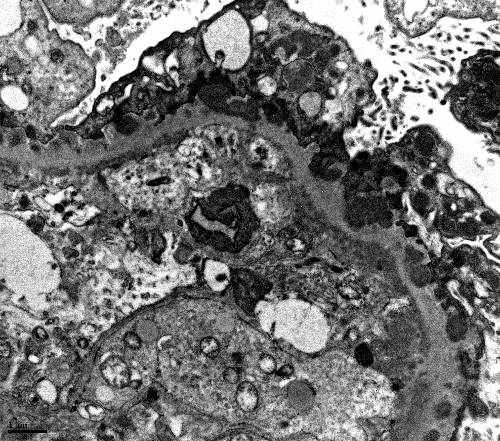
A 60 year-old with recently diagnosed colon cancer and diabetes presents with bilateral pedal edema, BP is 120/80 mm Hg, Urinalysis showed  4+ protein, no RBCs or WBCs, and 8-10 Hyaline casts. His BUN is 20, Creatinine is 1 mg/dL, and albumin is 2 grams/dL. 24 hour urine collection showed 10 grams protein. The patient undergoes kidney biopsy. The EM is shown below :


What is the most likely diagnosis?

A.  Crescentic GN
B.  IgA nephropathy
C.  Minimal change disease
D.  Focal segmental glomeruloscerosis
E.  Membranous nephropathy
F. Diabetic nephropathy
Correct

The correct answer is E

Membranous Nephropathy.

The Electron microscopy shows subepithelial electron dense deposit as classically seen in membranous nephropathy. If in the question there is a suggestion of colon, breast, or lung cancer, then the glomerulopathy is usually membranous. After that look for other findings on histopathology which will confirm the diagnosis. Subepithelial electron dense deposits.

Explanation:

BOARD POINT - FAMILIARIZE YOURSELF WITH THESE ASSOCIATIONS :

1. Solid cancers (colon, breast, lung, renal) plus proteinuria = Membranous nephropathy

2. Hodgkins lymphoma plus proteinuria = Minimal change disease

3. HIV plus proteinuria = Focal segment glomerulosclerosis FSGS

4. Pamidronate plus protenuria = FSGS (rare)

5. Myeloma, no albuminuria on dipstix, but proteinuria on protein/creatinine ratio or 24 hrs urine: Light chain nephropathy

6. Myeloma with non specific proteinuria (on dipstix, urine protein/creatinine ratio and 24 hrs urine): Light chain nephropathy or amyloidosis.


BOARD POINT - FAMILIARIZE YOURSELF WITH THESE HISTOPATHOLOGY ASSOCIATIONS FOR VARIOUS GLOMERULAR DISEASES


Copyright © ABIM Exam World
Created On: 09/20/2017
Last Modified: 08/29/2018

End

Previous Next
Multiple
  • Test Id: 1906965907460801d6
  • QId: 165246
  • 7 of 39
  • Notes
  • Calculator
  • Feedback

A 32 year-old male is brought to renal clinic with history of hematuria, oedema feet, and puffiness of face. He gives a history of fever and sore throat a week ago. He also complains of breathlessness on exertion and oliguria. Physical examination shows: Pulse 100/min, BP 150/100 mm Hg, and Temp. 37.4 C. He is pale. He has puffiness of face and oedema feet. Systemic examination-unremarkable. Laboratory examination is as follows:

Hb   10.5 g/d

Hct   34%

Platelet 250,000 mm3

WBC  8,000 mm3

Differential count P 80% L 12% E 6% M 2%

ESR  9.8 mm/h


Urinalysis:

Protein   3000 mg/24 h

Glucose   None

RBC   50-60/hpf Dysmorphic

WBC   occasional

Leukocyte Esterase Negative

Nitrites   Negati

BUN   40 mg/dL

Creatinine  3.9 mg/dL

Sodium   140 mEq/L

Potassium  4.2 mEq/L

Bicarbonate  25.5 mEq/L

S. protein  5.5 g/dl

S. Albumin  2.5 g/dl

Calcium   9.2 mEq/L

Phosphorus  3.2 mg/dL

Glucose   100 mg/dL

Uric Acid   5.3 mg/dL

C 3    Low

C4     normal

HBsAg /HIV   Neg

ANA    Neg

Kidney Biopsy: Shows enlarged Glomeruli, lobular accentuation, mesangial hypercellularity, endo-capillary proliferation and double contour along the capillary wall. IF shows bright C3 in mesangium and capillary wall with absent immunoglobulin staining. 

Electron Microscopy: Suggestive of dense deposits.

What is the BEST treatment option for this patient?


A. Plasma exchange + Rituximab 
B. Rituximab 
C. Eculuzimab
D. Cyclophosphamide + Steroids 
Incorrect
The correct answer is C

Eculuzimab

Explanation:

This patient has nephritic-nephrotic picture with low C3. The Kidney biopsy along with clinical presentation is suggestive of MPGN. Negative Immunoglobulins along with positive C3 staining narrows it down to DDD (DENSE DEPOSIT DISEASE) or C3-GN (C3-GN GLOMERULONEPHRITIS)

DDD or Dense deposit disease is best treated with Eculuzimab. 
Rituximab has not been found to be useful in DDD or C3-GN. 

ECULUZIMAB : has been shown to be useful in:
1. DDD
2. Atypical HUS – used along with plasma exchange. If using Eculuzimab give meningococcal vaccine or give penicillin till the vaccine becomes effective.

However, (additional information not pertaining to this question)

RITUXIMAB : has been shown to be useful in:
1. ANCA vasculitis (can be used in induction or relapse – RAVE TRIAL)
2. Wegeners
3. HCV cryoglobulinemia
TTP

***** TREATMENT OPTIONS IN GLOMERULONEPHRITIS WITH RITUXIMAB AND ECULUZIMAB ARE FREQUENTLY TESTED CONCEPTS IN NEPHROLOGY BOARD EXAMS. PLEASE REVIEW THESE IN DETAIL.*****


Copyright © ABIM Exam World
Created On: 09/20/2017
Last Modified: 08/06/2018

End

Previous Next
Multiple
  • Test Id: 1906965907460801d6
  • QId: 165262
  • 8 of 39
  • Notes
  • Calculator
  • Feedback

A 28-year-old gentleman, Caucasian descent, comes to clinic for follow up visit. He has been found to have type 1 diabetes mellitus since the age of 12 years of age. His cousin brother has the same disease. He reports no symptoms. He has been using insulin pump using insulin Aspart. He has been monitoring blood sugar using flash glucose monitor and uses carbohydrate count for boluses. He reports infrequent hypoglycemic episodes particularly 2 hours into post lunch, but, manages by himself. He exercises at least at least 60 minutes per day. His vitals recording shows BP of 118/66 mmHg. His BMI is 23.2.  System examination is unremarkable.


His laboratory investigation is reported as follows.


Characteristic

Value

Hemoglobin

14.2 gm/L 

WBC count

6.8 X 10³/cubic mm

Platelet count

241 X 103/cubic mm

Segmented Neutrophils 

Lymphocytes

Monocytes

Band neutrophils 

Eosinophils

Basophils

60%

36%

2%

0%

2%

0%

Sr Sodium

139 mEq/L

Sr Potassium

4.4 mEq/L

Sr Creatinine

0.6 mg/dL

eGFR using CKD-EPI

136.8 ml/min/1.73m2

Sr Bicarbonate

24 mEq/L

Sr Chloride

101 mEq/L

Total Bilirubin

1.0 mg /dL

AST

16 U/L

ALT

18 U/L

Sr Albumin

4.0 g/dL

HBA1C

7.9%

Sr Calcium

10 mg/dL

Urine dipstick

pH- 5.4

Albumin-nil

 no blood

 no WBCs

24-hour urinary protein 

76 milligrams/day


What is the MOST LIKELY incorrect statement regarding hyperfiltration stage of Diabetic Kidney Disease in this patient?

A. Renal hyperfiltration is usually diagnosed when the GFR is more than 120 ml/min,which corresponds to a renal function that exceeds two standard deviation above mean GFR.
B. Renal hyper filtration usually precedes microalbuminuria in type 1 diabetes mellitus.
C. Renal hyper filtration is considered as a risk factor for future progression to chronic kidney disease (CKD) and end stage renal disease (ESRD) in type 1 DM.
D. eGFR equations like MDRD equation can be used predict hyper filtration.
Incorrect

The Correct Answer is Option D : eGFR equations like MDRD equation can be used predict hyper filtration.


Explanation:


Supra physiologic elevation in GFR is observed early in the natural history of type 1 and type 2 diabetes mellitus which is due to glomerular hyper filtration  Pathogenesis of hyper filtration in diabetes is complex with a prominent role for hyperglycemia and distorted insulin levels especially in early diabetes and pre-diabetes. Dilatation of the afferent (pre-capillary) glomerular arteriole plays an important role in the hyper filtration response, by raising both the intra-glomerular pressure and renal blood flow.


Direct measurement of GFR is usually required to detect hyperfiltration because estimation equations, such as the Modification of Diet in Renal Disease (MDRD) usually underestimate the true GFR when it is normal or above normal. 


Option A : A definite cut off of GFR is lacking. However, renal hyper filtration is typically defined as a GFR of between 120 mL/min and 150 mL/min/1.73m2, or greater than 2 standard deviations above the mean GFR in normal, healthy individuals.


Option B: Hyper filtration in diabetes precedes the onset of albuminuria and/or decline in renal function, and predisposes to progressive nephron damage by increasing glomerular hydraulic pressure


Option C : Hyper filtration per se does not seem to fully explain adverse renal outcome, as the risk for ESRD in transplant donors is very low. However, in type 1 diabetes Rapid GFR decline is associated with renal hyper filtration and impaired GFR and may predict progressive DKD prior to loss of renal function.

Copyright © ABIM Exam World
Created On: 10/30/2018
Last Modified: 10/23/2020

End

Previous Next
Multiple
  • Test Id: 1906965907460801d6
  • QId: 165264
  • 9 of 39
  • Notes
  • Calculator
  • Feedback

A 68-year-old gentleman, Caucasian descent, comes to clinic for follow up visit. He is known to have type 2 diabetes mellitus for the past 18 years. His father had diabetes from 40 years of age and developed kidney disease requiring dialysis after 15 years of diabetes. He reports no symptoms. He has been having hypertension and coronary artery disease with history of  PCI 2 years ago. He has non-proliferative diabetic retinopathy. His medications are sitagliptin, gliclazide and metformin in addition to losartan and hydrochlorothiazide. He has been monitoring blood sugar at home and reports no hypoglycemia. He exercises at least at least 30 minutes per day. His vitals recording shows BP of 168/66 mm Hg. His BMI is 29.2.  Systemic  examination is unremarkable.

His laboratory investigation is reported as follows.

Characteristic

value

Hemoglobin

12.2 gm/L

WBC count

6.8 X 10³/cubic mm

Platelet count

241 X 103/cubic mm

Segmented Neutrophils

Lymphocytes

Monocytes

Band neutrophils

Eosinophils

Basophils

60%

36%

2%

0%

2%

0%

Sr. Sodium

139 mEq/L

Sr. Potassium

4.9 mEq/L

Sr. Creatinine

1.2 mg/dL

Sr. Bicarbonate

22 mEq/L

Sr. Chloride

101 mEq/L

Total Bilirubin

1.0 mg /dL

AST

16 U/L

ALT

18 U/L

Sr. Albumin

4.0 g/dL

HBA1C

7.8%

Sr. Calcium

10 mg/dL

Urine dipstick

pH- 5.4

Albumin-trace

 no blood

 no WBCs

24-hour urinary albumin

200 milligrams/day


What is the MOST LIKELY correct statement regarding clinical diagnosis of Diabetic Kidney Disease in this patient ?

A. Diabetic Kidney Disease previously called as diabetic nephropathy can be diagnosed clinically with renal biopsy only.  
B. Presence of microalbuminuria is adequate for clinical diagnosis of Diabetic Kidney Disease. 
C. Presence of hematuria without non-diabetic kidney disease is impossible in Diabetic Kidney Disease as diabetic kidney disease is a non-proliferative glomerular disease. 
D. Family history of Diabetic Kidney Disease is associated with renal involvement in Diabetes.
Incorrect

The Correct Answer is Option D: Family history of Diabetic Kidney Disease is associated with renal involvement in Diabetes.

 Explanation:

Familial studies have demonstrated clustering of diabetic nephropathy. Patients with DM with a first-degree relative with T1/T2DM and diabetic nephropathy have more risk for developing diabetic nephropathy than those without an affected relative. This familial clustering has also been well documented in the Pima Indian population. The candidate genes identified are glucose transporter 2(GLUT2), transforming growth factor beta (TGF- ?), and endothelial nitric oxide synthase (eNOS). 

Option A:  Diabetic nephropathy is a clinical syndrome characterized by the following:

·         Persistent albuminuria (>300 mg/d) that is confirmed on at least 2 occasions 3-6 months apart

·         Progressive decline in the glomerular filtration rate (GFR)

·         Elevated arterial blood pressure 

 Hence kidney biopsy is not a mandatory investigation to diagnose diabetic kidney disease.

 Option B:  If the amount of urine albumin exceeds 30 mg/d and is less than 300 mg/d it is called microalbuminuria, and if it is greater than 300 mg/d it is called macro albuminuria or overt albuminuria. Microalbuminuria is present in 5-7% of normal individuals and is associated with cardiovascular mortality and morbidity. It is marker of endothelial dysfunction in type 2 diabetes mellitus. Presence of microalbuminuria alone with diabetes cannot be clinically diagnostic of diabetic kidney disease.

Option C:  Micro hematuria has been demonstrated in biopsy studies with isolated diabetic nephropathy. Red blood cell casts have also been described in patients with diabetic nephropathy. However, it is important to rule out other glomerular and extra-glomerular causes of hematuria.

Copyright © ABIM Exam World
Created On: 10/31/2018

End

Previous Next
Multiple
  • Test Id: 1906965907460801d6
  • QId: 167340
  • 10 of 39
  • Notes
  • Calculator
  • Feedback

A 25-year-old man is referred to you for evaluation of nephrotic syndrome. A kidney biopsy is done, and it shows minimal change disease. His BP is 150/90 mmHg with a heart rate of 70 bpm. His current medications are as follows: Prednisone 40 mg once daily, furosemide 40 mg twice daily, Ramipril 10 mg once daily and Calcium + vitamin D supplementation. Clinical exam shows raised JVD, 3 + pitting edema till the ide thigh. His blood work shows Sr creatinine of 0.9 mg/dL, BUN 35 mg/dL and his Sr potassium is 3.2 mg/DL. Urine analysis is bland and his 24 hr urine protein is 5.8g. He is following his salt restriction strictly. After a month’s follow up his proteinuria has reduced to 4.0 g/24 hrs but his edema feet has unchanged. His Sr albumin has improved from 1.9 g/L to 2.8 g/L. Addition of which of the following drugs will benefit the patient? 

A. Metolazone.
B. Amiloride. 
C. Chlorthalidone. 
D. Cyclophosphamide. 
E. Amlodipine. 
F. Losartan. 
Incorrect

Correct Answer. Option B. Amiloride. 


Explanation. 


Two major factors, both of which lead to retention, have been thought to be responsible for the development of edema in patients with the nephrotic syndrome; it is likely that both contribute to a variable degree in individual patients:

  1. Primary sodium retention that is directly induced by the renal disease (overfill hypothesis).
  2. Secondary sodium retention in which the low plasma oncotic pressure due to hypoalbuminemia promotes the movement of fluid from the vascular space into the interstitium, leading to underfilling of the vasculature and activation of the renin-angiotensin-aldosterone system (underfill hypothesis).

The clinical importance of distinguishing between these mechanisms is the ability to tolerate diuretic therapy. Diuretics are well tolerated in patients with renal sodium retention but, if underfilling is the primary mechanism, can lead to worsening hypovolemia as evidenced clinically by an elevation in serum creatinine. 


Studies in experimental animals with unilateral nephrotic syndrome or glomerulonephritis suggest that primary sodium retention in these disorders is due to increased sodium reabsorption in the collecting tubules, which is also the site of action of atrial natriuretic peptide (ANP) and the related renal hormone urodilatin. This has been called the overfill hypothesis since primary renal sodium retention leads to volume expansion


Increased activity of the epithelial sodium channel (ENaC) may contribute to sodium retention. Serine proteases are aberrantly filtered in the nephrotic syndrome, leading to increased concentration in the urine. Plasminogen (which is activated by epithelial urokinase-type plasminogen activator [uPA] to plasmin) in nephrotic urine may activate ENaC via proteolytic cleavage of the gamma chain, providing a potential mechanism by which filtered proteins cause sodium retention. It also explains the observation that remission from the nephrotic syndrome is generally preceded by a decrease in urinary protein excretion. In an animal model of nephrotic syndrome, mice treated with the serine protease inhibitor aprotinin normalized urinary serine protease activity and prevented sodium retention. A similar result was seen when rats with nephrosis were treated with the ENaC inhibitor amiloride.

Hence Amiloride is the best answer for this clinical vignette. 

Copyright © ABIM Exam World
Created On: 05/18/2020
Last Modified: 01/28/2021

End

Previous Next
Multiple
  • Test Id: 1906965907460801d6
  • QId: 167345
  • 11 of 39
  • Notes
  • Calculator
  • Feedback

A 68-year-old Hispanic woman is referred to you for evaluation of nephrotic syndrome. She has history of type 2 diabetes and hypertension. Both diabetes and hypertension are well controlled. Her serum creatinine is 2.1 mg/dL. Urinalysis shows only proteinuria, and protein to creatinine ratio is 6. A renal biopsy shows amyloidosis and interstitial fibrosis. Based on the above history, biopsy findings, and proteinuria, which one of the following diagnostic tests you order to characterize the type of her amyloidosis?

A. Electron microscopy of the glomerulus.
B. Immunofluorescent studies.
C. Immunofixation study.
D. Amyloidosis derived from leukocyte chemotactic factor 2 (ALECT 2).
E. No further testing.
Incorrect

Correct Answer. Option D. Amyloidosis derived from leukocyte chemotactic factor 2 (ALECT 2).


Explanation. 

ALECT2 amyloidosis is a systemic form of amyloidosis with predominantly renal and liver involvement. Most reported cases in North America (88 to 92 %) occur in older Hispanic adults of Mexican origin, although Punjabis, First Nations people in British Columbia, and Native Americans also have a predisposition for this disorder. In one study of renal amyloidosis among Egyptians, ALECT2 amyloidosis was the second most common form of renal amyloidosis behind AA and ahead of AL amyloidosis. Cases have also been reported in Pakistani, Sudanese, and Chinese patients. The pathogenesis of ALECT2 amyloidosis is not well understood. Patients typically present with chronic kidney disease (CKD) and variable proteinuria; nephrotic syndrome is uncommon. A kidney biopsy, preferably with laser microdissection and mass spectrometry, is required to make the diagnosis. Patients with ALECT2 amyloidosis characteristically have diffuse Congo red-positive amyloid deposition in the cortical interstitium, with variable glomerular and vascular involvement. In general, patients with ALECT2 amyloidosis have better overall survival than those with AL or AA amyloidosis, possibly due to the absence or rare occurrence of cardiac involvement. However, renal survival is relatively poor, with up to 39 percent of patients progressing to end-stage renal disease (ESRD). There are no specific therapies for ALECT2 amyloidosis.

Copyright © ABIM Exam World
Created On: 05/19/2020
Last Modified: 01/28/2021

End

Previous Next
Multiple
  • Test Id: 1906965907460801d6
  • QId: 167347
  • 12 of 39
  • Notes
  • Calculator
  • Feedback

A 50-year-old male is referred to for evaluation of high-grade proteinuria. He is not a diabetic but is known to have hypertension. He takes hydrochlorothiazide 12.5 mg once daily for that. The blood and urine tests are shown below. You perform a kidney biopsy and it shows focal segmental glomerulosclerosis (FSGS). The concern is whether this is primary vs. secondary FSGS. Which of the following options would be supportive of secondary FSGS as opposed to primary FSGS? 


Value

Test

11.2 gm/L. 

Hemoglobin

6,800 cells/cumm

WBC count

2,41,000 cells/cumm

Platelet count

139 mEq/L.

Sr. Sodium

5.2 mEq/L.

Sr. Potassium

1.6 mg/dL.

Sr. creatinine

22 mEq/L.

Sr. Bicarbonate

101 mEq/L.

Sr. Chloride

4.0 g/dL.

Sr. Albumin

10 mg/dL.

Sr. Calcium

pH- 5.4.

Albumin-++++

no blood.

no WBCs.

Urine 

 3.8 grams/day.


24-hour urinary protein 

Negative


ANCA 

 Negative 


ANA

No monoclonal proteins 

Serum protein electrophoresis 

negative 

HIV

negative

HbsAg

negative

Anti HCV  


A. Increase in mesangial matrix.
B. Focal sclerosis only in some parts of the glomerulus in primary FSGS.
C. Serum albumin and width of foot processes (effacement of foot processes).
D. Tram-tract appearance of the basement membrane.
Correct

Correct Answer. Option C. Serum albumin and width of foot processes (effacement of foot processes).


Explanation. 

The causes of FSGS may be primary (idiopathic) or secondary. The secondary forms are generally characterized by glomerular hyperfiltration and glomerular hypertrophy. It was suggested that serum albumin and the degree of foot processes effacement can distinguish primary from secondary forms of FSGS. Praga et al. reported that serum albumin levels are <3 g/dL in those with biopsy proven primary FSGS, compared to

>3.5 g/dL in those patients with secondary FSGS. A histopathologic study by Deegens et al. showed that the width of foot processes is significantly higher (3200 nm) in primary FSGS, as compared with 1098 nm in secondary FSGS (normal 562 nm). Overall, foot process width over 1500 nm differentiated idiopathic from secondary FSGS with high sensitivity and specificity. This signifies that patients with primary FSGS have complete effacement of foot processes compared to patchy effacement in secondary FSGS. 


In a study of 46 patients with an FSGS lesion, patients were divided by the degree of foot process effacement observed on kidney biopsy. Patients were categorized as having diffuse (?80 %) or limited (<80 %) foot process effacement. Compared with patients with limited foot process effacement, those with diffuse foot process effacement without an identifiable cause had lower serum albumin levels and higher proteinuria and were more likely to have nephrotic syndrome on presentation (100 vs 4 %). Based upon these results, patients who presented with diffuse foot process effacement without an identifiable cause and nephrotic syndrome were classified as primary FSGS. Patients with segmental foot process effacement, with or without an identifiable cause, or diffuse foot process effacement due to an identifiable cause were classified as secondary FSGS.

Copyright © ABIM Exam World
Created On: 05/19/2020
Last Modified: 01/28/2021

End

Previous Next
Multiple
  • Test Id: 1906965907460801d6
  • QId: 1673177
  • 13 of 39
  • Notes
  • Calculator
  • Feedback

All of the following are helpful in predicting AV Graft stenosis EXCEPT:

A. Hyperpulsatility of the AV Graft
B. Reduced pulse augmentation
C. Increased bleeding and clots 
D. Decreased KT/V
E. Decreased Blood Flow rate
F. Surveillance of the graft
Correct
The correct answer is F
Surveillance of the graft

Explanation:

Intra-graft or venous outflow stenosis – A strong pulse in the AV graft - HYPERPULSATILITY suggests an increase in resistance as occurs with a venous stenotic lesion. The intensity of this pulse is directly proportional to the severity of the stenosis. For this reason, in an AV graft Hyperpulsatility can be considered as an indicator of impending AV graft stenosis.

Arterial stenosis – REDUCED PULSE AUGMENTATION suggests inflow stenosis due to stenosis of the arterial anastomosis or of the feeding artery. Although pulse augmentation is commonly performed, it is less sensitive for the detection of inflow stenosis in AV grafts compared with AV fistulas.

INCREASED BLOOD CLOTS, DECREASED KT/V, and DECREASED BLOOD FLOW RATE are all suggestive of impending AV graft stenosis. Often patients are seen with dilated, collateral veins over the arm and chest wall (very important to examine your hemodialysis patients after taking off their shirts) suggestive of central venous stenosis - The classic physical finding in a patient with a significant central venous stenosis is diffuse upper extremity edema. Subcutaneous collateral veins are frequently evident over the chest. Swelling and collateral veins are caused by generalized venous hypertension of the extremity, which occurs in central, but is rare with peripheral lesions. 

SURVEILLANCE  does not predict AV Graft stenosis. It is not a sensitive or specific modality to detect the same accurately.

Copyright © ABIM Exam World
Created On: 09/23/2020
Last Modified: 01/28/2021

End

Previous Next
Multiple
  • Test Id: 1906965907460801d6
  • QId: 167340
  • 14 of 39
  • Notes
  • Calculator
  • Feedback

A 40 year-old pleasant African man with ESRD secondary to FSGS started automated peritoneal dialysis. His prescription includes 2.5 L and 3 exchanges over 8 hours at night with a last fill of 2 L. He has a urine output of 1000 mL/day. A typical ultrafiltration on cycler is used at 1000 mL. Average drain volume of the day dwell was 1500 mL prior to going on the cycler at night. 

He came with complains of lower abdominal wall edema extending to the scrotum over the past 5 days. Without any change in the dialysis prescription, his drain volume before going on the cycler dropped to 900 mL, and the ultrafiltration volume on the cycler came down to 100 mL. He reports no pain with fill or drain. 

What is the next step?


A. Chest X ray PA and lateral view 
B. Drain the fluid middle of the day to reduce the dwell time
C. PD catheter manipulation
D. Abdominal CT scan with contrast in the dialysate
E. Switch to hemodialysis 
F. Pleurodesis 
Incorrect
The correct answer is D 

Abdominal CT scan with contrast in the dialysate

Explanation:

Typical ultrafiltration failure from peritoneal membrane failure presents gradually. More frequently, we see an apparent ultrafiltration failure from other reasons. 

Catheter malfunction can present with problem with inflow, outflow or both. A kink in the catheter poses problem with inflow and outflow. 

Omentum or blood clots clogging the catheter can cause only outflow problem. Fibrin clots, constipation with loaded rectum, and displaced PD catheter also cause outflow obstruction. X ray KUB is very helpful in diagnosing displaced catheter.   

FLUID LEAK leak into the abdominal wall causes swelling in the lower abdomen extending down to the scrotum or mons pubis and decrease in the drain volume. Usually this can be treated by temporarily doing low volume PD or transferring to HD for about 6 weeks. Such leaks starting few years after initiating PD usually do not respond to this approach and often requires placement of a new PD catheter.

A patent tunica vaginalis testes will cause UNILATERAL OR BILATERAL SCROTAL SWELLING without much swelling of the abdominal wall sometimes associated with decrease in the drain volume. A CT scan of the abdomen with ‘IV’ contrast into the peritoneal fluid can help in diagnosing the leak into the abdominal wall and scrotal leak. Patent tunica vaginalis testes requires surgery. Generally hemodialysis is not required after the surgery and low volume peritoneal dialysis can be resumed. This patient presents with signs of leak of fluid into the abdominal wall. A chest X ray is not required, so (Choice A) is wrong.

Draining during the middle of the day helps if the membrane is very permeable with very high D/P creatinine ratio on PET. This does not help in abdominal wall leak of dialysate. Therefore, (Choice B) is also wrong.

PD catheter manipulation (Choice C) is wrong because this patient does not have displaced PD catheter from the information given.

(Choice D) is the correct answer. If the clinical presentation is very convincing, most patients are treated with reducing the dialysate volume and if possible keeping the abdomen dry during the day. Sometimes these patients need to be switched to hemodialysis for 4-6 weeks before PD is resumed. Hence temporary switch to HD would be a correct answer, but unqualified switch to HD as is stated in answer E would be a wrong choice. Therefore, (Choice E) is the wrong or less appropriate answer.

ABDOMINAL ADHESIONS cause decrease in the drain volume as well and require surgical treatment with low volume PD or temporary HD after that.

DIAPHRAGMATIC LEAK into the pleural space presents with cough and shortness of breath without peripheral signs of fluid overload few weeks after starting peritoneal dialysis (not the presentation in this patient). Usually, such patients present with right sided pleural effusion clinically and on chest X ray PA and lateral view. These patients can be treated with temporary transfer to HD, pleuridesis and return back to PD 4-6 weeks later. Permanent switch to hemoidialysis without pleurodesis is another option.


TREATMENT OPTIONS OF VARIOUS ABDOMINAL/CHEST PROBLEMS AS MENTIONED ABOVE IN PATIENTS ON PERITONEAL DIALYSIS IS FREQUENTLY TESTED ON BOARDS. PLEASE KNOW THE TREATMENT OPTIONS.


Copyright © ABIM Exam World
Created On: 09/14/2017
Last Modified: 08/06/2018

End

Previous Next
Multiple
  • Test Id: 1906965907460801d6
  • QId: 167345
  • 15 of 39
  • Notes
  • Calculator
  • Feedback

Cyclosporine nephrotoxicity in a renal transplant recipient is associated with all the below renal biopsy findings EXCEPT:

(THIS PICTURE BELOW IN LOW POWER SHOWS ONE OF THE CLASSICAL FINDINGS IN CSA TOXICITY)


A. Interstitial Fibrosis  
B. Tubular atrophy 
C. Endothelial cell swelling 
D. Glomerular thrombin deposits
E. Glomerular basement membrane thickening 
F. Double contours of the GB 
Incorrect
The correct answer is D

Glomerular thrombin deposits

Explanation:

In a patient with suspected cyclosporine nephrotoxicity, the renal biopsy reveals an obliterative arteriolopathy (which is classically seen in afferent renal arterioles) suggesting primary endothelial damage and subsequently endothelial cell swelling which may persist for months in a patient with elevated cyclosporine blood levels. This is also associated with thickened glomerular basement membrane and double contour pattern. In fact according to BANF thickened glomerular basement membrane and double contour pattern is most suggestive of chronic allograft nephropathy (CAN) also called as TRANSPLANT GLOMERULOPATHY. 

The other renal biopsy findings of cyclosporine nephrotoxicity include ischemic collapse or scarring of the glomeruli, vacuolization of the tubules, FSGS, and focal areas of tubular atrophy and interstitial fibrosis (producing a picture of “ZEBRA” or "STRIPED" fibrosis) These changes are seen with both low-dose and higher-dose cyclosporine therapy, although they seem to co-relate earlier with higher doses. 

(THE ABOVE PICTURE IN THE UPPER HALF SHOWS TUBULAR ATROPHY APPEARING DARK AND REDDISH ALTERNATING WITH LIGHT BLUE AREAS OF INTERSTITIAL FIBROSIS GIVING A "STRIPED" OR "ZEBRA" APPEARANCE)

THE PICTURE BELOW SHOWS TUBULAR ATROPHY, VACUOLIZATION OF THE TUBULES AND ISCHEMIC CHANGES:


Mild arteriolar hyalinosis at six months appears to be associated with high doses of cyclosporine and was reversible. However, after more than a year irreversible severe arteriolar hyalinosis and glomerulosclerosis were observed, despite decreased doses and trough levels of cyclosporine.

Glomerular thrombin deposits are typically seen in patients with Lupus, anti phospholipid syndromes and other vasculitides. It is typically not seen in cyclosporine nephrotoxicity.

Copyright © ABIM Exam World
Created On: 09/14/2017
Last Modified: 08/06/2018

End

Previous Next
Multiple
  • Test Id: 1906965907460801d6
  • QId: 167347
  • 16 of 39
  • Notes
  • Calculator
  • Feedback

A 68 year-old African American male with known history of diabetes mellitus,  hyperlipidemia, CVD, and GERD presents to the ER with chest pain and shortness of breath. Patient says the pain is a crushing pain and radiating to his left arm. It woke him from sleep 30 minutes ago. He took his antacids and 4 tablets of nitroglycerin, and the pain got better. His current medications include low dose aspirin, metoprolol, glyburide, pioglitazone, lisinopril, simvastatin, and omeprazole. He recently suffered an upper respiratory infection for which he was given Levofloxacin. Vitals show: BP 160/95 mm Hg, T 98.1, and HR 110. He has no edema legs and no jugular venous distention. EKG shows LVH by voltage criteria with isoelectric ST segment. Serial troponin levels are normal. A stress test showed evidence of stress inducible ischemia in the anterior leads. He is scheduled for cardiac catheterization the next day. Laboratory results are as follows:

Serum Chemistry:

Na   143 mEq/L

K   3.5 mEq/L

Cl   101 mEq/L

HCO3  22 mEq/L

BUN   35 mg/dL

Cr   3.0 mg/dL

Glucose  110 mg/dL 

What would you do to PROTECT the kidneys before doing the cardiac catheterization?

A. Dopamine IV infusion before and after the  procedure.
B. Nifedipine.
C. Isotonic sodium bicarbonate infusion before and after the procedure.
D. N Acetyl Cysteine before and after the procedure
E. Start mannitol IV before the procedure
F. Left ventriculogram quickly with coronary angiogram
Correct
The correct answer is C

Isotonic sodium bicarbonate infusion before and after the procedure. N acetyl cysteine is also used but efficacy in studies is unproven.

Explanation:

Contrast nephropathy usually presents as rise in creatinine 24-48 hrs after exposure to IV radio-contrast.

Other features of CONTRAST NEPHROPATHY are:
  • Low fractional excretion of sodium (FeNa) below 1%.
  • Iodinated contrast agents test false positive for protein and hence proteinuria gets overestimated
  • It is reversible most of the time
  • UA may show muddy brown granular casts, tubular epithelial cell casts and numerous tubular epithelial casts.

Contrast associated nephropathy has to be differentiated from atheroembolic disease which presents with deterioration in kidney function days to weeks after the procedure,  embolic lesions (such as digital ischemia of the toes) or livedo reticularis, transient eosinophilia and hypocomplementemia,  protracted course with frequently little or no recovery of renal function, and kidney biopsy showing the typical biconvex, needle-shaped clefts ("ghosts") within the occluded vessel from the space occupied by the cholesterol crystal that dissolves during the processing of the tissue giving a ‘fish mouth’ appearance.

(Choice A) There is no evidence to support that dopamine infusion is beneficial. In fact, it may be harmful.

(Choice B) There is no evidence to support that nifedipine is beneficial.

(Choice C) There are studies to suggest that infusion of isotonic saline or half normal saline may be beneficial. Since alkalization may protect against free radical injury, the possibility that sodium bicarbonate may be superior to isotonic saline. In patients who tolerate extra volume (i.e. those who are not volume overloaded or those who are not in heart failure) it would be reasonable to infuse isotonic sodium bicarbonate or saline.

(Choice D) There are studies to suggest that oral N acetyl cysteine before and after the procedure to reduce the risk of contrast nephropathy is beneficial. There are also studies to suggest that this is not beneficial. N acetyl is believed to function by its vasodilator effect and antioxidant effect. Considering that N Acetyl cysteine is safe and cheap, many physicians would administer it prophylactically as well even though results are conflicting. 

(Choice E) There are studies to suggest that prophylactic mannitol or furosemide is harmful.
    
(Choice F) Left ventriculogram should be avoided in patients at high risk of developing contrast nephropathy to minimize the quantity of IV contrast needed.

RISK FACTORS - for contrast nephropathy are :
  • Chronic kidney disease
  • Diabetes mellitus
  • Congestive heart failure
  • Myeloma kidney
  • Hypotension

Educational Objective:

1. Identify and diagnose contrast nephropathy

2. Prevention of contrast nephropathy

Copyright © ABIM Exam World
Created On: 09/14/2017
Last Modified: 08/06/2018

End

Previous Next
Multiple
  • Test Id: 1906965907460801d6
  • QId: 16524
  • 17 of 39
  • Notes
  • Calculator
  • Feedback

Which of the following antihypertensive medications resulted in better blood pressure control and cardiovascular outcomes when combined with an ACE inhibitor?


A. Beta blocker 
B. Calcium channel blocker
C. Angiotensin Receptor Blocker 
D. Diuretics 
Incorrect
The correct answer is B
Calcium channel blocker 

Explanation:

The ACCOMPLISH trial has clearly shown that that an ACE inhibitor combined with a Calcium channel blocker (amlodipine) is better than an ACE inhibitor combined with a diuretic (hydrochlorothiazide). This study did not involve beta blockers or angiotensin receptor blockers. 

The ACCOMPLISH trial was the first major clinical trial addressing the issue of combination therapy in 11,000 patients who were at high cardiovascular risk (with prior CAD, diabetes, and/or CKD). The patients were randomly assigned to combination therapy with benazepril (20 mg/day) combined with either amlodipine (5 mg/day) or Hydrochlorothiazide (12.5 mg/day).

The mean blood pressure was significantly lower in the Benazepril + Amlodipine group, with the primary end point also significant in this group. There was a similar benefit with the treatment combination of benazepril-amlodipine in the secondary end point of cardiovascular death compared to the group treated with a combination of amlodipine and hydrochlorothiazide. 

Copyright © ABIM Exam World
Created On: 09/20/2017
Last Modified: 01/28/2021

End

Previous Next
Multiple
  • Test Id: 1906965907460801d6
  • QId: 165230
  • 18 of 39
  • Notes
  • Calculator
  • Feedback

A 56 year-old male was brought to the emergency room with drowsiness and lethargy. He has been experiencing these for the last 2 days. He complains of a recent history of anorexia, nausea, and vomiting, He has diabetes mellitus and is on glimepiride 1 mg daily for the last 4 years. One week ago he had decreased vision with redness in his right eye. He was treated by his ophthalmologist with drops which seem to have resolved the problem. He currently takes cholecalciferol weekly for osteoporosis. On physical examination his pulse is 80/min, blood pressure is 140/90 mm Hg, respiratory rate is 20/min, and temperature is 97.7 F. The patient appears drowsy but shows no focal neurological deficits. Review of systems is otherwise unremarkable. Urinalysis is positive for glucose and negative for proteinuria, WBCs and RBC casts. A 24 hour urinary protein collection is significant for proteinuria of 3.5 g/day. Further labs reveal:

Hemoglobin  8 gm%

Hct    24%

MCV   85

WBC   7800/ml

PMN   80%

Lymphocytes  20%

ESR   80 mm/hr

Na    145 mEq/L

BUN   80 mg/dL

Cr    1.8 mg/dL

CL    115 mEq/L

HCO3   25 mEq/L

Uric acid   5.8 mg/dL

Ca    14 mg/dl

PO4    2.8 mg/dL

Total Protein  7.8 gm/dL

Albumin   3.5 mg/dL.

Vitamin D  40 ng/ml

PTH   10 pg/ml

Which of the following is most likely the cause of his hypercalcemia?


A.  Vitamin D toxicity
B. Primary hyperparathyroidism
C.  Multiple myeloma.
D. Sarcoidosis
Correct
The correct answer is C

Multiple myeloma

Explanation:

Multiple myeloma is due to proliferation of plasma cells producing a monoclonal immunoglobulin.

The diagnosis of multiple myeloma is supported by the presence of many of the following factors:
  • Advanced Age
  • Backache and Bone pain
  • Anemia
  • High ESR
  • Urine protein negative by dipstick and positive by other tests is characteristic of light chain proteinuria.
  • High Total protein
  • Low anion gap
  • Hypercalcemia and hyperuricemia favors the diagnosis of multiple myeloma.

(Choice A) This patient has received Vitamin D treatment. Vitamin D toxicity can give rise to hypercalcemia. Serum vitamin D3 levels will be high. PTH will be low.  Patient’s vitamin D level of 40ng/ml (normal range is 30-100ng/ml) does not favor Vitamin D toxicity.

(Choice B) Primary hyperparathyroidism is the commonest cause of hypercalcemia among outpatients. It is characterized by elevated PTH. Patient’s PTH level of 10 pg/ml rules out primary hyperparathyroidism.

(Choice D) Sarcoidosis is a multisystem granulomatous disorder of unknown cause. Hypercalcemia and hypercalciuria in sarcoidosis is associated with high vitamin D levels. This patient has low vitamin D levels and hence it is unlikely to be the cause. Also there is no history or findings to suggest sarcoidosis.

Copyright © ABIM Exam World
Created On: 09/20/2017
Last Modified: 08/06/2018

End

Previous Next
Multiple
  • Test Id: 1906965907460801d6
  • QId: 165242
  • 19 of 39
  • Notes
  • Calculator
  • Feedback

A 60 year-old with recently diagnosed colon cancer and diabetes presents with bilateral pedal edema, BP is 120/80 mm Hg, Urinalysis showed  4+ protein, no RBCs or WBCs, and 8-10 Hyaline casts. His BUN is 20, Creatinine is 1 mg/dL, and albumin is 2 grams/dL. 24 hour urine collection showed 10 grams protein. The patient undergoes kidney biopsy. The EM is shown below :


What is the most likely diagnosis?

A.  Crescentic GN
B.  IgA nephropathy
C.  Minimal change disease
D.  Focal segmental glomeruloscerosis
E.  Membranous nephropathy
F. Diabetic nephropathy
Correct

The correct answer is E

Membranous Nephropathy.

The Electron microscopy shows subepithelial electron dense deposit as classically seen in membranous nephropathy. If in the question there is a suggestion of colon, breast, or lung cancer, then the glomerulopathy is usually membranous. After that look for other findings on histopathology which will confirm the diagnosis. Subepithelial electron dense deposits.

Explanation:

BOARD POINT - FAMILIARIZE YOURSELF WITH THESE ASSOCIATIONS :

1. Solid cancers (colon, breast, lung, renal) plus proteinuria = Membranous nephropathy

2. Hodgkins lymphoma plus proteinuria = Minimal change disease

3. HIV plus proteinuria = Focal segment glomerulosclerosis FSGS

4. Pamidronate plus protenuria = FSGS (rare)

5. Myeloma, no albuminuria on dipstix, but proteinuria on protein/creatinine ratio or 24 hrs urine: Light chain nephropathy

6. Myeloma with non specific proteinuria (on dipstix, urine protein/creatinine ratio and 24 hrs urine): Light chain nephropathy or amyloidosis.


BOARD POINT - FAMILIARIZE YOURSELF WITH THESE HISTOPATHOLOGY ASSOCIATIONS FOR VARIOUS GLOMERULAR DISEASES


Copyright © ABIM Exam World
Created On: 09/20/2017
Last Modified: 08/29/2018

End

Previous Next
Multiple
  • Test Id: 1906965907460801d6
  • QId: 165246
  • 20 of 39
  • Notes
  • Calculator
  • Feedback

A 32 year-old male is brought to renal clinic with history of hematuria, oedema feet, and puffiness of face. He gives a history of fever and sore throat a week ago. He also complains of breathlessness on exertion and oliguria. Physical examination shows: Pulse 100/min, BP 150/100 mm Hg, and Temp. 37.4 C. He is pale. He has puffiness of face and oedema feet. Systemic examination-unremarkable. Laboratory examination is as follows:

Hb   10.5 g/d

Hct   34%

Platelet 250,000 mm3

WBC  8,000 mm3

Differential count P 80% L 12% E 6% M 2%

ESR  9.8 mm/h


Urinalysis:

Protein   3000 mg/24 h

Glucose   None

RBC   50-60/hpf Dysmorphic

WBC   occasional

Leukocyte Esterase Negative

Nitrites   Negati

BUN   40 mg/dL

Creatinine  3.9 mg/dL

Sodium   140 mEq/L

Potassium  4.2 mEq/L

Bicarbonate  25.5 mEq/L

S. protein  5.5 g/dl

S. Albumin  2.5 g/dl

Calcium   9.2 mEq/L

Phosphorus  3.2 mg/dL

Glucose   100 mg/dL

Uric Acid   5.3 mg/dL

C 3    Low

C4     normal

HBsAg /HIV   Neg

ANA    Neg

Kidney Biopsy: Shows enlarged Glomeruli, lobular accentuation, mesangial hypercellularity, endo-capillary proliferation and double contour along the capillary wall. IF shows bright C3 in mesangium and capillary wall with absent immunoglobulin staining. 

Electron Microscopy: Suggestive of dense deposits.

What is the BEST treatment option for this patient?


A. Plasma exchange + Rituximab 
B. Rituximab 
C. Eculuzimab
D. Cyclophosphamide + Steroids 
Incorrect
The correct answer is C

Eculuzimab

Explanation:

This patient has nephritic-nephrotic picture with low C3. The Kidney biopsy along with clinical presentation is suggestive of MPGN. Negative Immunoglobulins along with positive C3 staining narrows it down to DDD (DENSE DEPOSIT DISEASE) or C3-GN (C3-GN GLOMERULONEPHRITIS)

DDD or Dense deposit disease is best treated with Eculuzimab. 
Rituximab has not been found to be useful in DDD or C3-GN. 

ECULUZIMAB : has been shown to be useful in:
1. DDD
2. Atypical HUS – used along with plasma exchange. If using Eculuzimab give meningococcal vaccine or give penicillin till the vaccine becomes effective.

However, (additional information not pertaining to this question)

RITUXIMAB : has been shown to be useful in:
1. ANCA vasculitis (can be used in induction or relapse – RAVE TRIAL)
2. Wegeners
3. HCV cryoglobulinemia
TTP

***** TREATMENT OPTIONS IN GLOMERULONEPHRITIS WITH RITUXIMAB AND ECULUZIMAB ARE FREQUENTLY TESTED CONCEPTS IN NEPHROLOGY BOARD EXAMS. PLEASE REVIEW THESE IN DETAIL.*****


Copyright © ABIM Exam World
Created On: 09/20/2017
Last Modified: 08/06/2018

End

Previous Next
Multiple
  • Test Id: 1906965907460801d6
  • QId: 165262
  • 21 of 39
  • Notes
  • Calculator
  • Feedback

A 28-year-old gentleman, Caucasian descent, comes to clinic for follow up visit. He has been found to have type 1 diabetes mellitus since the age of 12 years of age. His cousin brother has the same disease. He reports no symptoms. He has been using insulin pump using insulin Aspart. He has been monitoring blood sugar using flash glucose monitor and uses carbohydrate count for boluses. He reports infrequent hypoglycemic episodes particularly 2 hours into post lunch, but, manages by himself. He exercises at least at least 60 minutes per day. His vitals recording shows BP of 118/66 mmHg. His BMI is 23.2.  System examination is unremarkable.


His laboratory investigation is reported as follows.


Characteristic

Value

Hemoglobin

14.2 gm/L 

WBC count

6.8 X 10³/cubic mm

Platelet count

241 X 103/cubic mm

Segmented Neutrophils 

Lymphocytes

Monocytes

Band neutrophils 

Eosinophils

Basophils

60%

36%

2%

0%

2%

0%

Sr Sodium

139 mEq/L

Sr Potassium

4.4 mEq/L

Sr Creatinine

0.6 mg/dL

eGFR using CKD-EPI

136.8 ml/min/1.73m2

Sr Bicarbonate

24 mEq/L

Sr Chloride

101 mEq/L

Total Bilirubin

1.0 mg /dL

AST

16 U/L

ALT

18 U/L

Sr Albumin

4.0 g/dL

HBA1C

7.9%

Sr Calcium

10 mg/dL

Urine dipstick

pH- 5.4

Albumin-nil

 no blood

 no WBCs

24-hour urinary protein 

76 milligrams/day


What is the MOST LIKELY incorrect statement regarding hyperfiltration stage of Diabetic Kidney Disease in this patient?

A. Renal hyperfiltration is usually diagnosed when the GFR is more than 120 ml/min,which corresponds to a renal function that exceeds two standard deviation above mean GFR.
B. Renal hyper filtration usually precedes microalbuminuria in type 1 diabetes mellitus.
C. Renal hyper filtration is considered as a risk factor for future progression to chronic kidney disease (CKD) and end stage renal disease (ESRD) in type 1 DM.
D. eGFR equations like MDRD equation can be used predict hyper filtration.
Incorrect

The Correct Answer is Option D : eGFR equations like MDRD equation can be used predict hyper filtration.


Explanation:


Supra physiologic elevation in GFR is observed early in the natural history of type 1 and type 2 diabetes mellitus which is due to glomerular hyper filtration  Pathogenesis of hyper filtration in diabetes is complex with a prominent role for hyperglycemia and distorted insulin levels especially in early diabetes and pre-diabetes. Dilatation of the afferent (pre-capillary) glomerular arteriole plays an important role in the hyper filtration response, by raising both the intra-glomerular pressure and renal blood flow.


Direct measurement of GFR is usually required to detect hyperfiltration because estimation equations, such as the Modification of Diet in Renal Disease (MDRD) usually underestimate the true GFR when it is normal or above normal. 


Option A : A definite cut off of GFR is lacking. However, renal hyper filtration is typically defined as a GFR of between 120 mL/min and 150 mL/min/1.73m2, or greater than 2 standard deviations above the mean GFR in normal, healthy individuals.


Option B: Hyper filtration in diabetes precedes the onset of albuminuria and/or decline in renal function, and predisposes to progressive nephron damage by increasing glomerular hydraulic pressure


Option C : Hyper filtration per se does not seem to fully explain adverse renal outcome, as the risk for ESRD in transplant donors is very low. However, in type 1 diabetes Rapid GFR decline is associated with renal hyper filtration and impaired GFR and may predict progressive DKD prior to loss of renal function.

Copyright © ABIM Exam World
Created On: 10/30/2018
Last Modified: 10/23/2020

End

Previous Next
Multiple
  • Test Id: 1906965907460801d6
  • QId: 165264
  • 22 of 39
  • Notes
  • Calculator
  • Feedback

A 68-year-old gentleman, Caucasian descent, comes to clinic for follow up visit. He is known to have type 2 diabetes mellitus for the past 18 years. His father had diabetes from 40 years of age and developed kidney disease requiring dialysis after 15 years of diabetes. He reports no symptoms. He has been having hypertension and coronary artery disease with history of  PCI 2 years ago. He has non-proliferative diabetic retinopathy. His medications are sitagliptin, gliclazide and metformin in addition to losartan and hydrochlorothiazide. He has been monitoring blood sugar at home and reports no hypoglycemia. He exercises at least at least 30 minutes per day. His vitals recording shows BP of 168/66 mm Hg. His BMI is 29.2.  Systemic  examination is unremarkable.

His laboratory investigation is reported as follows.

Characteristic

value

Hemoglobin

12.2 gm/L

WBC count

6.8 X 10³/cubic mm

Platelet count

241 X 103/cubic mm

Segmented Neutrophils

Lymphocytes

Monocytes

Band neutrophils

Eosinophils

Basophils

60%

36%

2%

0%

2%

0%

Sr. Sodium

139 mEq/L

Sr. Potassium

4.9 mEq/L

Sr. Creatinine

1.2 mg/dL

Sr. Bicarbonate

22 mEq/L

Sr. Chloride

101 mEq/L

Total Bilirubin

1.0 mg /dL

AST

16 U/L

ALT

18 U/L

Sr. Albumin

4.0 g/dL

HBA1C

7.8%

Sr. Calcium

10 mg/dL

Urine dipstick

pH- 5.4

Albumin-trace

 no blood

 no WBCs

24-hour urinary albumin

200 milligrams/day


What is the MOST LIKELY correct statement regarding clinical diagnosis of Diabetic Kidney Disease in this patient ?

A. Diabetic Kidney Disease previously called as diabetic nephropathy can be diagnosed clinically with renal biopsy only.  
B. Presence of microalbuminuria is adequate for clinical diagnosis of Diabetic Kidney Disease. 
C. Presence of hematuria without non-diabetic kidney disease is impossible in Diabetic Kidney Disease as diabetic kidney disease is a non-proliferative glomerular disease. 
D. Family history of Diabetic Kidney Disease is associated with renal involvement in Diabetes.
Incorrect

The Correct Answer is Option D: Family history of Diabetic Kidney Disease is associated with renal involvement in Diabetes.

 Explanation:

Familial studies have demonstrated clustering of diabetic nephropathy. Patients with DM with a first-degree relative with T1/T2DM and diabetic nephropathy have more risk for developing diabetic nephropathy than those without an affected relative. This familial clustering has also been well documented in the Pima Indian population. The candidate genes identified are glucose transporter 2(GLUT2), transforming growth factor beta (TGF- ?), and endothelial nitric oxide synthase (eNOS). 

Option A:  Diabetic nephropathy is a clinical syndrome characterized by the following:

·         Persistent albuminuria (>300 mg/d) that is confirmed on at least 2 occasions 3-6 months apart

·         Progressive decline in the glomerular filtration rate (GFR)

·         Elevated arterial blood pressure 

 Hence kidney biopsy is not a mandatory investigation to diagnose diabetic kidney disease.

 Option B:  If the amount of urine albumin exceeds 30 mg/d and is less than 300 mg/d it is called microalbuminuria, and if it is greater than 300 mg/d it is called macro albuminuria or overt albuminuria. Microalbuminuria is present in 5-7% of normal individuals and is associated with cardiovascular mortality and morbidity. It is marker of endothelial dysfunction in type 2 diabetes mellitus. Presence of microalbuminuria alone with diabetes cannot be clinically diagnostic of diabetic kidney disease.

Option C:  Micro hematuria has been demonstrated in biopsy studies with isolated diabetic nephropathy. Red blood cell casts have also been described in patients with diabetic nephropathy. However, it is important to rule out other glomerular and extra-glomerular causes of hematuria.

Copyright © ABIM Exam World
Created On: 10/31/2018

End

Previous Next
Multiple
  • Test Id: 1906965907460801d6
  • QId: 167340
  • 23 of 39
  • Notes
  • Calculator
  • Feedback

A 25-year-old man is referred to you for evaluation of nephrotic syndrome. A kidney biopsy is done, and it shows minimal change disease. His BP is 150/90 mmHg with a heart rate of 70 bpm. His current medications are as follows: Prednisone 40 mg once daily, furosemide 40 mg twice daily, Ramipril 10 mg once daily and Calcium + vitamin D supplementation. Clinical exam shows raised JVD, 3 + pitting edema till the ide thigh. His blood work shows Sr creatinine of 0.9 mg/dL, BUN 35 mg/dL and his Sr potassium is 3.2 mg/DL. Urine analysis is bland and his 24 hr urine protein is 5.8g. He is following his salt restriction strictly. After a month’s follow up his proteinuria has reduced to 4.0 g/24 hrs but his edema feet has unchanged. His Sr albumin has improved from 1.9 g/L to 2.8 g/L. Addition of which of the following drugs will benefit the patient? 

A. Metolazone.
B. Amiloride. 
C. Chlorthalidone. 
D. Cyclophosphamide. 
E. Amlodipine. 
F. Losartan. 
Incorrect

Correct Answer. Option B. Amiloride. 


Explanation. 


Two major factors, both of which lead to retention, have been thought to be responsible for the development of edema in patients with the nephrotic syndrome; it is likely that both contribute to a variable degree in individual patients:

  1. Primary sodium retention that is directly induced by the renal disease (overfill hypothesis).
  2. Secondary sodium retention in which the low plasma oncotic pressure due to hypoalbuminemia promotes the movement of fluid from the vascular space into the interstitium, leading to underfilling of the vasculature and activation of the renin-angiotensin-aldosterone system (underfill hypothesis).

The clinical importance of distinguishing between these mechanisms is the ability to tolerate diuretic therapy. Diuretics are well tolerated in patients with renal sodium retention but, if underfilling is the primary mechanism, can lead to worsening hypovolemia as evidenced clinically by an elevation in serum creatinine. 


Studies in experimental animals with unilateral nephrotic syndrome or glomerulonephritis suggest that primary sodium retention in these disorders is due to increased sodium reabsorption in the collecting tubules, which is also the site of action of atrial natriuretic peptide (ANP) and the related renal hormone urodilatin. This has been called the overfill hypothesis since primary renal sodium retention leads to volume expansion


Increased activity of the epithelial sodium channel (ENaC) may contribute to sodium retention. Serine proteases are aberrantly filtered in the nephrotic syndrome, leading to increased concentration in the urine. Plasminogen (which is activated by epithelial urokinase-type plasminogen activator [uPA] to plasmin) in nephrotic urine may activate ENaC via proteolytic cleavage of the gamma chain, providing a potential mechanism by which filtered proteins cause sodium retention. It also explains the observation that remission from the nephrotic syndrome is generally preceded by a decrease in urinary protein excretion. In an animal model of nephrotic syndrome, mice treated with the serine protease inhibitor aprotinin normalized urinary serine protease activity and prevented sodium retention. A similar result was seen when rats with nephrosis were treated with the ENaC inhibitor amiloride.

Hence Amiloride is the best answer for this clinical vignette. 

Copyright © ABIM Exam World
Created On: 05/18/2020
Last Modified: 01/28/2021

End

Previous Next
Multiple
  • Test Id: 1906965907460801d6
  • QId: 167345
  • 24 of 39
  • Notes
  • Calculator
  • Feedback

A 68-year-old Hispanic woman is referred to you for evaluation of nephrotic syndrome. She has history of type 2 diabetes and hypertension. Both diabetes and hypertension are well controlled. Her serum creatinine is 2.1 mg/dL. Urinalysis shows only proteinuria, and protein to creatinine ratio is 6. A renal biopsy shows amyloidosis and interstitial fibrosis. Based on the above history, biopsy findings, and proteinuria, which one of the following diagnostic tests you order to characterize the type of her amyloidosis?

A. Electron microscopy of the glomerulus.
B. Immunofluorescent studies.
C. Immunofixation study.
D. Amyloidosis derived from leukocyte chemotactic factor 2 (ALECT 2).
E. No further testing.
Incorrect

Correct Answer. Option D. Amyloidosis derived from leukocyte chemotactic factor 2 (ALECT 2).


Explanation. 

ALECT2 amyloidosis is a systemic form of amyloidosis with predominantly renal and liver involvement. Most reported cases in North America (88 to 92 %) occur in older Hispanic adults of Mexican origin, although Punjabis, First Nations people in British Columbia, and Native Americans also have a predisposition for this disorder. In one study of renal amyloidosis among Egyptians, ALECT2 amyloidosis was the second most common form of renal amyloidosis behind AA and ahead of AL amyloidosis. Cases have also been reported in Pakistani, Sudanese, and Chinese patients. The pathogenesis of ALECT2 amyloidosis is not well understood. Patients typically present with chronic kidney disease (CKD) and variable proteinuria; nephrotic syndrome is uncommon. A kidney biopsy, preferably with laser microdissection and mass spectrometry, is required to make the diagnosis. Patients with ALECT2 amyloidosis characteristically have diffuse Congo red-positive amyloid deposition in the cortical interstitium, with variable glomerular and vascular involvement. In general, patients with ALECT2 amyloidosis have better overall survival than those with AL or AA amyloidosis, possibly due to the absence or rare occurrence of cardiac involvement. However, renal survival is relatively poor, with up to 39 percent of patients progressing to end-stage renal disease (ESRD). There are no specific therapies for ALECT2 amyloidosis.

Copyright © ABIM Exam World
Created On: 05/19/2020
Last Modified: 01/28/2021

End

Previous Next
Multiple
  • Test Id: 1906965907460801d6
  • QId: 167347
  • 25 of 39
  • Notes
  • Calculator
  • Feedback

A 50-year-old male is referred to for evaluation of high-grade proteinuria. He is not a diabetic but is known to have hypertension. He takes hydrochlorothiazide 12.5 mg once daily for that. The blood and urine tests are shown below. You perform a kidney biopsy and it shows focal segmental glomerulosclerosis (FSGS). The concern is whether this is primary vs. secondary FSGS. Which of the following options would be supportive of secondary FSGS as opposed to primary FSGS? 


Value

Test

11.2 gm/L. 

Hemoglobin

6,800 cells/cumm

WBC count

2,41,000 cells/cumm

Platelet count

139 mEq/L.

Sr. Sodium

5.2 mEq/L.

Sr. Potassium

1.6 mg/dL.

Sr. creatinine

22 mEq/L.

Sr. Bicarbonate

101 mEq/L.

Sr. Chloride

4.0 g/dL.

Sr. Albumin

10 mg/dL.

Sr. Calcium

pH- 5.4.

Albumin-++++

no blood.

no WBCs.

Urine 

 3.8 grams/day.


24-hour urinary protein 

Negative


ANCA 

 Negative 


ANA

No monoclonal proteins 

Serum protein electrophoresis 

negative 

HIV

negative

HbsAg

negative

Anti HCV  


A. Increase in mesangial matrix.
B. Focal sclerosis only in some parts of the glomerulus in primary FSGS.
C. Serum albumin and width of foot processes (effacement of foot processes).
D. Tram-tract appearance of the basement membrane.
Correct

Correct Answer. Option C. Serum albumin and width of foot processes (effacement of foot processes).


Explanation. 

The causes of FSGS may be primary (idiopathic) or secondary. The secondary forms are generally characterized by glomerular hyperfiltration and glomerular hypertrophy. It was suggested that serum albumin and the degree of foot processes effacement can distinguish primary from secondary forms of FSGS. Praga et al. reported that serum albumin levels are <3 g/dL in those with biopsy proven primary FSGS, compared to

>3.5 g/dL in those patients with secondary FSGS. A histopathologic study by Deegens et al. showed that the width of foot processes is significantly higher (3200 nm) in primary FSGS, as compared with 1098 nm in secondary FSGS (normal 562 nm). Overall, foot process width over 1500 nm differentiated idiopathic from secondary FSGS with high sensitivity and specificity. This signifies that patients with primary FSGS have complete effacement of foot processes compared to patchy effacement in secondary FSGS. 


In a study of 46 patients with an FSGS lesion, patients were divided by the degree of foot process effacement observed on kidney biopsy. Patients were categorized as having diffuse (?80 %) or limited (<80 %) foot process effacement. Compared with patients with limited foot process effacement, those with diffuse foot process effacement without an identifiable cause had lower serum albumin levels and higher proteinuria and were more likely to have nephrotic syndrome on presentation (100 vs 4 %). Based upon these results, patients who presented with diffuse foot process effacement without an identifiable cause and nephrotic syndrome were classified as primary FSGS. Patients with segmental foot process effacement, with or without an identifiable cause, or diffuse foot process effacement due to an identifiable cause were classified as secondary FSGS.

Copyright © ABIM Exam World
Created On: 05/19/2020
Last Modified: 01/28/2021

End

Previous Next
Multiple
  • Test Id: 1906965907460801d6
  • QId: 1673177
  • 26 of 39
  • Notes
  • Calculator
  • Feedback

All of the following are helpful in predicting AV Graft stenosis EXCEPT:

A. Hyperpulsatility of the AV Graft
B. Reduced pulse augmentation
C. Increased bleeding and clots 
D. Decreased KT/V
E. Decreased Blood Flow rate
F. Surveillance of the graft
Correct
The correct answer is F
Surveillance of the graft

Explanation:

Intra-graft or venous outflow stenosis – A strong pulse in the AV graft - HYPERPULSATILITY suggests an increase in resistance as occurs with a venous stenotic lesion. The intensity of this pulse is directly proportional to the severity of the stenosis. For this reason, in an AV graft Hyperpulsatility can be considered as an indicator of impending AV graft stenosis.

Arterial stenosis – REDUCED PULSE AUGMENTATION suggests inflow stenosis due to stenosis of the arterial anastomosis or of the feeding artery. Although pulse augmentation is commonly performed, it is less sensitive for the detection of inflow stenosis in AV grafts compared with AV fistulas.

INCREASED BLOOD CLOTS, DECREASED KT/V, and DECREASED BLOOD FLOW RATE are all suggestive of impending AV graft stenosis. Often patients are seen with dilated, collateral veins over the arm and chest wall (very important to examine your hemodialysis patients after taking off their shirts) suggestive of central venous stenosis - The classic physical finding in a patient with a significant central venous stenosis is diffuse upper extremity edema. Subcutaneous collateral veins are frequently evident over the chest. Swelling and collateral veins are caused by generalized venous hypertension of the extremity, which occurs in central, but is rare with peripheral lesions. 

SURVEILLANCE  does not predict AV Graft stenosis. It is not a sensitive or specific modality to detect the same accurately.

Copyright © ABIM Exam World
Created On: 09/23/2020
Last Modified: 01/28/2021

End

Previous Next
Multiple
  • Test Id: 1906965907460801d6
  • QId: 167340
  • 27 of 39
  • Notes
  • Calculator
  • Feedback

A 40 year-old pleasant African man with ESRD secondary to FSGS started automated peritoneal dialysis. His prescription includes 2.5 L and 3 exchanges over 8 hours at night with a last fill of 2 L. He has a urine output of 1000 mL/day. A typical ultrafiltration on cycler is used at 1000 mL. Average drain volume of the day dwell was 1500 mL prior to going on the cycler at night. 

He came with complains of lower abdominal wall edema extending to the scrotum over the past 5 days. Without any change in the dialysis prescription, his drain volume before going on the cycler dropped to 900 mL, and the ultrafiltration volume on the cycler came down to 100 mL. He reports no pain with fill or drain. 

What is the next step?


A. Chest X ray PA and lateral view 
B. Drain the fluid middle of the day to reduce the dwell time
C. PD catheter manipulation
D. Abdominal CT scan with contrast in the dialysate
E. Switch to hemodialysis 
F. Pleurodesis 
Incorrect
The correct answer is D 

Abdominal CT scan with contrast in the dialysate

Explanation:

Typical ultrafiltration failure from peritoneal membrane failure presents gradually. More frequently, we see an apparent ultrafiltration failure from other reasons. 

Catheter malfunction can present with problem with inflow, outflow or both. A kink in the catheter poses problem with inflow and outflow. 

Omentum or blood clots clogging the catheter can cause only outflow problem. Fibrin clots, constipation with loaded rectum, and displaced PD catheter also cause outflow obstruction. X ray KUB is very helpful in diagnosing displaced catheter.   

FLUID LEAK leak into the abdominal wall causes swelling in the lower abdomen extending down to the scrotum or mons pubis and decrease in the drain volume. Usually this can be treated by temporarily doing low volume PD or transferring to HD for about 6 weeks. Such leaks starting few years after initiating PD usually do not respond to this approach and often requires placement of a new PD catheter.

A patent tunica vaginalis testes will cause UNILATERAL OR BILATERAL SCROTAL SWELLING without much swelling of the abdominal wall sometimes associated with decrease in the drain volume. A CT scan of the abdomen with ‘IV’ contrast into the peritoneal fluid can help in diagnosing the leak into the abdominal wall and scrotal leak. Patent tunica vaginalis testes requires surgery. Generally hemodialysis is not required after the surgery and low volume peritoneal dialysis can be resumed. This patient presents with signs of leak of fluid into the abdominal wall. A chest X ray is not required, so (Choice A) is wrong.

Draining during the middle of the day helps if the membrane is very permeable with very high D/P creatinine ratio on PET. This does not help in abdominal wall leak of dialysate. Therefore, (Choice B) is also wrong.

PD catheter manipulation (Choice C) is wrong because this patient does not have displaced PD catheter from the information given.

(Choice D) is the correct answer. If the clinical presentation is very convincing, most patients are treated with reducing the dialysate volume and if possible keeping the abdomen dry during the day. Sometimes these patients need to be switched to hemodialysis for 4-6 weeks before PD is resumed. Hence temporary switch to HD would be a correct answer, but unqualified switch to HD as is stated in answer E would be a wrong choice. Therefore, (Choice E) is the wrong or less appropriate answer.

ABDOMINAL ADHESIONS cause decrease in the drain volume as well and require surgical treatment with low volume PD or temporary HD after that.

DIAPHRAGMATIC LEAK into the pleural space presents with cough and shortness of breath without peripheral signs of fluid overload few weeks after starting peritoneal dialysis (not the presentation in this patient). Usually, such patients present with right sided pleural effusion clinically and on chest X ray PA and lateral view. These patients can be treated with temporary transfer to HD, pleuridesis and return back to PD 4-6 weeks later. Permanent switch to hemoidialysis without pleurodesis is another option.


TREATMENT OPTIONS OF VARIOUS ABDOMINAL/CHEST PROBLEMS AS MENTIONED ABOVE IN PATIENTS ON PERITONEAL DIALYSIS IS FREQUENTLY TESTED ON BOARDS. PLEASE KNOW THE TREATMENT OPTIONS.


Copyright © ABIM Exam World
Created On: 09/14/2017
Last Modified: 08/06/2018

End

Previous Next
Multiple
  • Test Id: 1906965907460801d6
  • QId: 167345
  • 28 of 39
  • Notes
  • Calculator
  • Feedback

Cyclosporine nephrotoxicity in a renal transplant recipient is associated with all the below renal biopsy findings EXCEPT:

(THIS PICTURE BELOW IN LOW POWER SHOWS ONE OF THE CLASSICAL FINDINGS IN CSA TOXICITY)


A. Interstitial Fibrosis  
B. Tubular atrophy 
C. Endothelial cell swelling 
D. Glomerular thrombin deposits
E. Glomerular basement membrane thickening 
F. Double contours of the GB 
Incorrect
The correct answer is D

Glomerular thrombin deposits

Explanation:

In a patient with suspected cyclosporine nephrotoxicity, the renal biopsy reveals an obliterative arteriolopathy (which is classically seen in afferent renal arterioles) suggesting primary endothelial damage and subsequently endothelial cell swelling which may persist for months in a patient with elevated cyclosporine blood levels. This is also associated with thickened glomerular basement membrane and double contour pattern. In fact according to BANF thickened glomerular basement membrane and double contour pattern is most suggestive of chronic allograft nephropathy (CAN) also called as TRANSPLANT GLOMERULOPATHY. 

The other renal biopsy findings of cyclosporine nephrotoxicity include ischemic collapse or scarring of the glomeruli, vacuolization of the tubules, FSGS, and focal areas of tubular atrophy and interstitial fibrosis (producing a picture of “ZEBRA” or "STRIPED" fibrosis) These changes are seen with both low-dose and higher-dose cyclosporine therapy, although they seem to co-relate earlier with higher doses. 

(THE ABOVE PICTURE IN THE UPPER HALF SHOWS TUBULAR ATROPHY APPEARING DARK AND REDDISH ALTERNATING WITH LIGHT BLUE AREAS OF INTERSTITIAL FIBROSIS GIVING A "STRIPED" OR "ZEBRA" APPEARANCE)

THE PICTURE BELOW SHOWS TUBULAR ATROPHY, VACUOLIZATION OF THE TUBULES AND ISCHEMIC CHANGES:


Mild arteriolar hyalinosis at six months appears to be associated with high doses of cyclosporine and was reversible. However, after more than a year irreversible severe arteriolar hyalinosis and glomerulosclerosis were observed, despite decreased doses and trough levels of cyclosporine.

Glomerular thrombin deposits are typically seen in patients with Lupus, anti phospholipid syndromes and other vasculitides. It is typically not seen in cyclosporine nephrotoxicity.

Copyright © ABIM Exam World
Created On: 09/14/2017
Last Modified: 08/06/2018

End

Previous Next
Multiple
  • Test Id: 1906965907460801d6
  • QId: 167347
  • 29 of 39
  • Notes
  • Calculator
  • Feedback

A 68 year-old African American male with known history of diabetes mellitus,  hyperlipidemia, CVD, and GERD presents to the ER with chest pain and shortness of breath. Patient says the pain is a crushing pain and radiating to his left arm. It woke him from sleep 30 minutes ago. He took his antacids and 4 tablets of nitroglycerin, and the pain got better. His current medications include low dose aspirin, metoprolol, glyburide, pioglitazone, lisinopril, simvastatin, and omeprazole. He recently suffered an upper respiratory infection for which he was given Levofloxacin. Vitals show: BP 160/95 mm Hg, T 98.1, and HR 110. He has no edema legs and no jugular venous distention. EKG shows LVH by voltage criteria with isoelectric ST segment. Serial troponin levels are normal. A stress test showed evidence of stress inducible ischemia in the anterior leads. He is scheduled for cardiac catheterization the next day. Laboratory results are as follows:

Serum Chemistry:

Na   143 mEq/L

K   3.5 mEq/L

Cl   101 mEq/L

HCO3  22 mEq/L

BUN   35 mg/dL

Cr   3.0 mg/dL

Glucose  110 mg/dL 

What would you do to PROTECT the kidneys before doing the cardiac catheterization?

A. Dopamine IV infusion before and after the  procedure.
B. Nifedipine.
C. Isotonic sodium bicarbonate infusion before and after the procedure.
D. N Acetyl Cysteine before and after the procedure
E. Start mannitol IV before the procedure
F. Left ventriculogram quickly with coronary angiogram
Correct
The correct answer is C

Isotonic sodium bicarbonate infusion before and after the procedure. N acetyl cysteine is also used but efficacy in studies is unproven.

Explanation:

Contrast nephropathy usually presents as rise in creatinine 24-48 hrs after exposure to IV radio-contrast.

Other features of CONTRAST NEPHROPATHY are:
  • Low fractional excretion of sodium (FeNa) below 1%.
  • Iodinated contrast agents test false positive for protein and hence proteinuria gets overestimated
  • It is reversible most of the time
  • UA may show muddy brown granular casts, tubular epithelial cell casts and numerous tubular epithelial casts.

Contrast associated nephropathy has to be differentiated from atheroembolic disease which presents with deterioration in kidney function days to weeks after the procedure,  embolic lesions (such as digital ischemia of the toes) or livedo reticularis, transient eosinophilia and hypocomplementemia,  protracted course with frequently little or no recovery of renal function, and kidney biopsy showing the typical biconvex, needle-shaped clefts ("ghosts") within the occluded vessel from the space occupied by the cholesterol crystal that dissolves during the processing of the tissue giving a ‘fish mouth’ appearance.

(Choice A) There is no evidence to support that dopamine infusion is beneficial. In fact, it may be harmful.

(Choice B) There is no evidence to support that nifedipine is beneficial.

(Choice C) There are studies to suggest that infusion of isotonic saline or half normal saline may be beneficial. Since alkalization may protect against free radical injury, the possibility that sodium bicarbonate may be superior to isotonic saline. In patients who tolerate extra volume (i.e. those who are not volume overloaded or those who are not in heart failure) it would be reasonable to infuse isotonic sodium bicarbonate or saline.

(Choice D) There are studies to suggest that oral N acetyl cysteine before and after the procedure to reduce the risk of contrast nephropathy is beneficial. There are also studies to suggest that this is not beneficial. N acetyl is believed to function by its vasodilator effect and antioxidant effect. Considering that N Acetyl cysteine is safe and cheap, many physicians would administer it prophylactically as well even though results are conflicting. 

(Choice E) There are studies to suggest that prophylactic mannitol or furosemide is harmful.
    
(Choice F) Left ventriculogram should be avoided in patients at high risk of developing contrast nephropathy to minimize the quantity of IV contrast needed.

RISK FACTORS - for contrast nephropathy are :
  • Chronic kidney disease
  • Diabetes mellitus
  • Congestive heart failure
  • Myeloma kidney
  • Hypotension

Educational Objective:

1. Identify and diagnose contrast nephropathy

2. Prevention of contrast nephropathy

Copyright © ABIM Exam World
Created On: 09/14/2017
Last Modified: 08/06/2018

End

Previous Next
Multiple
  • Test Id: 1906965907460801d6
  • QId: 16524
  • 30 of 39
  • Notes
  • Calculator
  • Feedback

Which of the following antihypertensive medications resulted in better blood pressure control and cardiovascular outcomes when combined with an ACE inhibitor?


A. Beta blocker 
B. Calcium channel blocker
C. Angiotensin Receptor Blocker 
D. Diuretics 
Incorrect
The correct answer is B
Calcium channel blocker 

Explanation:

The ACCOMPLISH trial has clearly shown that that an ACE inhibitor combined with a Calcium channel blocker (amlodipine) is better than an ACE inhibitor combined with a diuretic (hydrochlorothiazide). This study did not involve beta blockers or angiotensin receptor blockers. 

The ACCOMPLISH trial was the first major clinical trial addressing the issue of combination therapy in 11,000 patients who were at high cardiovascular risk (with prior CAD, diabetes, and/or CKD). The patients were randomly assigned to combination therapy with benazepril (20 mg/day) combined with either amlodipine (5 mg/day) or Hydrochlorothiazide (12.5 mg/day).

The mean blood pressure was significantly lower in the Benazepril + Amlodipine group, with the primary end point also significant in this group. There was a similar benefit with the treatment combination of benazepril-amlodipine in the secondary end point of cardiovascular death compared to the group treated with a combination of amlodipine and hydrochlorothiazide. 

Copyright © ABIM Exam World
Created On: 09/20/2017
Last Modified: 01/28/2021

End

Previous Next
Multiple
  • Test Id: 1906965907460801d6
  • QId: 165230
  • 31 of 39
  • Notes
  • Calculator
  • Feedback

A 56 year-old male was brought to the emergency room with drowsiness and lethargy. He has been experiencing these for the last 2 days. He complains of a recent history of anorexia, nausea, and vomiting, He has diabetes mellitus and is on glimepiride 1 mg daily for the last 4 years. One week ago he had decreased vision with redness in his right eye. He was treated by his ophthalmologist with drops which seem to have resolved the problem. He currently takes cholecalciferol weekly for osteoporosis. On physical examination his pulse is 80/min, blood pressure is 140/90 mm Hg, respiratory rate is 20/min, and temperature is 97.7 F. The patient appears drowsy but shows no focal neurological deficits. Review of systems is otherwise unremarkable. Urinalysis is positive for glucose and negative for proteinuria, WBCs and RBC casts. A 24 hour urinary protein collection is significant for proteinuria of 3.5 g/day. Further labs reveal:

Hemoglobin  8 gm%

Hct    24%

MCV   85

WBC   7800/ml

PMN   80%

Lymphocytes  20%

ESR   80 mm/hr

Na    145 mEq/L

BUN   80 mg/dL

Cr    1.8 mg/dL

CL    115 mEq/L

HCO3   25 mEq/L

Uric acid   5.8 mg/dL

Ca    14 mg/dl

PO4    2.8 mg/dL

Total Protein  7.8 gm/dL

Albumin   3.5 mg/dL.

Vitamin D  40 ng/ml

PTH   10 pg/ml

Which of the following is most likely the cause of his hypercalcemia?


A.  Vitamin D toxicity
B. Primary hyperparathyroidism
C.  Multiple myeloma.
D. Sarcoidosis
Correct
The correct answer is C

Multiple myeloma

Explanation:

Multiple myeloma is due to proliferation of plasma cells producing a monoclonal immunoglobulin.

The diagnosis of multiple myeloma is supported by the presence of many of the following factors:
  • Advanced Age
  • Backache and Bone pain
  • Anemia
  • High ESR
  • Urine protein negative by dipstick and positive by other tests is characteristic of light chain proteinuria.
  • High Total protein
  • Low anion gap
  • Hypercalcemia and hyperuricemia favors the diagnosis of multiple myeloma.

(Choice A) This patient has received Vitamin D treatment. Vitamin D toxicity can give rise to hypercalcemia. Serum vitamin D3 levels will be high. PTH will be low.  Patient’s vitamin D level of 40ng/ml (normal range is 30-100ng/ml) does not favor Vitamin D toxicity.

(Choice B) Primary hyperparathyroidism is the commonest cause of hypercalcemia among outpatients. It is characterized by elevated PTH. Patient’s PTH level of 10 pg/ml rules out primary hyperparathyroidism.

(Choice D) Sarcoidosis is a multisystem granulomatous disorder of unknown cause. Hypercalcemia and hypercalciuria in sarcoidosis is associated with high vitamin D levels. This patient has low vitamin D levels and hence it is unlikely to be the cause. Also there is no history or findings to suggest sarcoidosis.

Copyright © ABIM Exam World
Created On: 09/20/2017
Last Modified: 08/06/2018

End

Previous Next
Multiple
  • Test Id: 1906965907460801d6
  • QId: 165242
  • 32 of 39
  • Notes
  • Calculator
  • Feedback

A 60 year-old with recently diagnosed colon cancer and diabetes presents with bilateral pedal edema, BP is 120/80 mm Hg, Urinalysis showed  4+ protein, no RBCs or WBCs, and 8-10 Hyaline casts. His BUN is 20, Creatinine is 1 mg/dL, and albumin is 2 grams/dL. 24 hour urine collection showed 10 grams protein. The patient undergoes kidney biopsy. The EM is shown below :


What is the most likely diagnosis?

A.  Crescentic GN
B.  IgA nephropathy
C.  Minimal change disease
D.  Focal segmental glomeruloscerosis
E.  Membranous nephropathy
F. Diabetic nephropathy
Correct

The correct answer is E

Membranous Nephropathy.

The Electron microscopy shows subepithelial electron dense deposit as classically seen in membranous nephropathy. If in the question there is a suggestion of colon, breast, or lung cancer, then the glomerulopathy is usually membranous. After that look for other findings on histopathology which will confirm the diagnosis. Subepithelial electron dense deposits.

Explanation:

BOARD POINT - FAMILIARIZE YOURSELF WITH THESE ASSOCIATIONS :

1. Solid cancers (colon, breast, lung, renal) plus proteinuria = Membranous nephropathy

2. Hodgkins lymphoma plus proteinuria = Minimal change disease

3. HIV plus proteinuria = Focal segment glomerulosclerosis FSGS

4. Pamidronate plus protenuria = FSGS (rare)

5. Myeloma, no albuminuria on dipstix, but proteinuria on protein/creatinine ratio or 24 hrs urine: Light chain nephropathy

6. Myeloma with non specific proteinuria (on dipstix, urine protein/creatinine ratio and 24 hrs urine): Light chain nephropathy or amyloidosis.


BOARD POINT - FAMILIARIZE YOURSELF WITH THESE HISTOPATHOLOGY ASSOCIATIONS FOR VARIOUS GLOMERULAR DISEASES


Copyright © ABIM Exam World
Created On: 09/20/2017
Last Modified: 08/29/2018

End

Previous Next
Multiple
  • Test Id: 1906965907460801d6
  • QId: 165246
  • 33 of 39
  • Notes
  • Calculator
  • Feedback

A 32 year-old male is brought to renal clinic with history of hematuria, oedema feet, and puffiness of face. He gives a history of fever and sore throat a week ago. He also complains of breathlessness on exertion and oliguria. Physical examination shows: Pulse 100/min, BP 150/100 mm Hg, and Temp. 37.4 C. He is pale. He has puffiness of face and oedema feet. Systemic examination-unremarkable. Laboratory examination is as follows:

Hb   10.5 g/d

Hct   34%

Platelet 250,000 mm3

WBC  8,000 mm3

Differential count P 80% L 12% E 6% M 2%

ESR  9.8 mm/h


Urinalysis:

Protein   3000 mg/24 h

Glucose   None

RBC   50-60/hpf Dysmorphic

WBC   occasional

Leukocyte Esterase Negative

Nitrites   Negati

BUN   40 mg/dL

Creatinine  3.9 mg/dL

Sodium   140 mEq/L

Potassium  4.2 mEq/L

Bicarbonate  25.5 mEq/L

S. protein  5.5 g/dl

S. Albumin  2.5 g/dl

Calcium   9.2 mEq/L

Phosphorus  3.2 mg/dL

Glucose   100 mg/dL

Uric Acid   5.3 mg/dL

C 3    Low

C4     normal

HBsAg /HIV   Neg

ANA    Neg

Kidney Biopsy: Shows enlarged Glomeruli, lobular accentuation, mesangial hypercellularity, endo-capillary proliferation and double contour along the capillary wall. IF shows bright C3 in mesangium and capillary wall with absent immunoglobulin staining. 

Electron Microscopy: Suggestive of dense deposits.

What is the BEST treatment option for this patient?


A. Plasma exchange + Rituximab 
B. Rituximab 
C. Eculuzimab
D. Cyclophosphamide + Steroids 
Incorrect
The correct answer is C

Eculuzimab

Explanation:

This patient has nephritic-nephrotic picture with low C3. The Kidney biopsy along with clinical presentation is suggestive of MPGN. Negative Immunoglobulins along with positive C3 staining narrows it down to DDD (DENSE DEPOSIT DISEASE) or C3-GN (C3-GN GLOMERULONEPHRITIS)

DDD or Dense deposit disease is best treated with Eculuzimab. 
Rituximab has not been found to be useful in DDD or C3-GN. 

ECULUZIMAB : has been shown to be useful in:
1. DDD
2. Atypical HUS – used along with plasma exchange. If using Eculuzimab give meningococcal vaccine or give penicillin till the vaccine becomes effective.

However, (additional information not pertaining to this question)

RITUXIMAB : has been shown to be useful in:
1. ANCA vasculitis (can be used in induction or relapse – RAVE TRIAL)
2. Wegeners
3. HCV cryoglobulinemia
TTP

***** TREATMENT OPTIONS IN GLOMERULONEPHRITIS WITH RITUXIMAB AND ECULUZIMAB ARE FREQUENTLY TESTED CONCEPTS IN NEPHROLOGY BOARD EXAMS. PLEASE REVIEW THESE IN DETAIL.*****


Copyright © ABIM Exam World
Created On: 09/20/2017
Last Modified: 08/06/2018

End

Previous Next
Multiple
  • Test Id: 1906965907460801d6
  • QId: 165262
  • 34 of 39
  • Notes
  • Calculator
  • Feedback

A 28-year-old gentleman, Caucasian descent, comes to clinic for follow up visit. He has been found to have type 1 diabetes mellitus since the age of 12 years of age. His cousin brother has the same disease. He reports no symptoms. He has been using insulin pump using insulin Aspart. He has been monitoring blood sugar using flash glucose monitor and uses carbohydrate count for boluses. He reports infrequent hypoglycemic episodes particularly 2 hours into post lunch, but, manages by himself. He exercises at least at least 60 minutes per day. His vitals recording shows BP of 118/66 mmHg. His BMI is 23.2.  System examination is unremarkable.


His laboratory investigation is reported as follows.


Characteristic

Value

Hemoglobin

14.2 gm/L 

WBC count

6.8 X 10³/cubic mm

Platelet count

241 X 103/cubic mm

Segmented Neutrophils 

Lymphocytes

Monocytes

Band neutrophils 

Eosinophils

Basophils

60%

36%

2%

0%

2%

0%

Sr Sodium

139 mEq/L

Sr Potassium

4.4 mEq/L

Sr Creatinine

0.6 mg/dL

eGFR using CKD-EPI

136.8 ml/min/1.73m2

Sr Bicarbonate

24 mEq/L

Sr Chloride

101 mEq/L

Total Bilirubin

1.0 mg /dL

AST

16 U/L

ALT

18 U/L

Sr Albumin

4.0 g/dL

HBA1C

7.9%

Sr Calcium

10 mg/dL

Urine dipstick

pH- 5.4

Albumin-nil

 no blood

 no WBCs

24-hour urinary protein 

76 milligrams/day


What is the MOST LIKELY incorrect statement regarding hyperfiltration stage of Diabetic Kidney Disease in this patient?

A. Renal hyperfiltration is usually diagnosed when the GFR is more than 120 ml/min,which corresponds to a renal function that exceeds two standard deviation above mean GFR.
B. Renal hyper filtration usually precedes microalbuminuria in type 1 diabetes mellitus.
C. Renal hyper filtration is considered as a risk factor for future progression to chronic kidney disease (CKD) and end stage renal disease (ESRD) in type 1 DM.
D. eGFR equations like MDRD equation can be used predict hyper filtration.
Incorrect

The Correct Answer is Option D : eGFR equations like MDRD equation can be used predict hyper filtration.


Explanation:


Supra physiologic elevation in GFR is observed early in the natural history of type 1 and type 2 diabetes mellitus which is due to glomerular hyper filtration  Pathogenesis of hyper filtration in diabetes is complex with a prominent role for hyperglycemia and distorted insulin levels especially in early diabetes and pre-diabetes. Dilatation of the afferent (pre-capillary) glomerular arteriole plays an important role in the hyper filtration response, by raising both the intra-glomerular pressure and renal blood flow.


Direct measurement of GFR is usually required to detect hyperfiltration because estimation equations, such as the Modification of Diet in Renal Disease (MDRD) usually underestimate the true GFR when it is normal or above normal. 


Option A : A definite cut off of GFR is lacking. However, renal hyper filtration is typically defined as a GFR of between 120 mL/min and 150 mL/min/1.73m2, or greater than 2 standard deviations above the mean GFR in normal, healthy individuals.


Option B: Hyper filtration in diabetes precedes the onset of albuminuria and/or decline in renal function, and predisposes to progressive nephron damage by increasing glomerular hydraulic pressure


Option C : Hyper filtration per se does not seem to fully explain adverse renal outcome, as the risk for ESRD in transplant donors is very low. However, in type 1 diabetes Rapid GFR decline is associated with renal hyper filtration and impaired GFR and may predict progressive DKD prior to loss of renal function.

Copyright © ABIM Exam World
Created On: 10/30/2018
Last Modified: 10/23/2020

End

Previous Next
Multiple
  • Test Id: 1906965907460801d6
  • QId: 165264
  • 35 of 39
  • Notes
  • Calculator
  • Feedback

A 68-year-old gentleman, Caucasian descent, comes to clinic for follow up visit. He is known to have type 2 diabetes mellitus for the past 18 years. His father had diabetes from 40 years of age and developed kidney disease requiring dialysis after 15 years of diabetes. He reports no symptoms. He has been having hypertension and coronary artery disease with history of  PCI 2 years ago. He has non-proliferative diabetic retinopathy. His medications are sitagliptin, gliclazide and metformin in addition to losartan and hydrochlorothiazide. He has been monitoring blood sugar at home and reports no hypoglycemia. He exercises at least at least 30 minutes per day. His vitals recording shows BP of 168/66 mm Hg. His BMI is 29.2.  Systemic  examination is unremarkable.

His laboratory investigation is reported as follows.

Characteristic

value

Hemoglobin

12.2 gm/L

WBC count

6.8 X 10³/cubic mm

Platelet count

241 X 103/cubic mm

Segmented Neutrophils

Lymphocytes

Monocytes

Band neutrophils

Eosinophils

Basophils

60%

36%

2%

0%

2%

0%

Sr. Sodium

139 mEq/L

Sr. Potassium

4.9 mEq/L

Sr. Creatinine

1.2 mg/dL

Sr. Bicarbonate

22 mEq/L

Sr. Chloride

101 mEq/L

Total Bilirubin

1.0 mg /dL

AST

16 U/L

ALT

18 U/L

Sr. Albumin

4.0 g/dL

HBA1C

7.8%

Sr. Calcium

10 mg/dL

Urine dipstick

pH- 5.4

Albumin-trace

 no blood

 no WBCs

24-hour urinary albumin

200 milligrams/day


What is the MOST LIKELY correct statement regarding clinical diagnosis of Diabetic Kidney Disease in this patient ?

A. Diabetic Kidney Disease previously called as diabetic nephropathy can be diagnosed clinically with renal biopsy only.  
B. Presence of microalbuminuria is adequate for clinical diagnosis of Diabetic Kidney Disease. 
C. Presence of hematuria without non-diabetic kidney disease is impossible in Diabetic Kidney Disease as diabetic kidney disease is a non-proliferative glomerular disease. 
D. Family history of Diabetic Kidney Disease is associated with renal involvement in Diabetes.
Incorrect

The Correct Answer is Option D: Family history of Diabetic Kidney Disease is associated with renal involvement in Diabetes.

 Explanation:

Familial studies have demonstrated clustering of diabetic nephropathy. Patients with DM with a first-degree relative with T1/T2DM and diabetic nephropathy have more risk for developing diabetic nephropathy than those without an affected relative. This familial clustering has also been well documented in the Pima Indian population. The candidate genes identified are glucose transporter 2(GLUT2), transforming growth factor beta (TGF- ?), and endothelial nitric oxide synthase (eNOS). 

Option A:  Diabetic nephropathy is a clinical syndrome characterized by the following:

·         Persistent albuminuria (>300 mg/d) that is confirmed on at least 2 occasions 3-6 months apart

·         Progressive decline in the glomerular filtration rate (GFR)

·         Elevated arterial blood pressure 

 Hence kidney biopsy is not a mandatory investigation to diagnose diabetic kidney disease.

 Option B:  If the amount of urine albumin exceeds 30 mg/d and is less than 300 mg/d it is called microalbuminuria, and if it is greater than 300 mg/d it is called macro albuminuria or overt albuminuria. Microalbuminuria is present in 5-7% of normal individuals and is associated with cardiovascular mortality and morbidity. It is marker of endothelial dysfunction in type 2 diabetes mellitus. Presence of microalbuminuria alone with diabetes cannot be clinically diagnostic of diabetic kidney disease.

Option C:  Micro hematuria has been demonstrated in biopsy studies with isolated diabetic nephropathy. Red blood cell casts have also been described in patients with diabetic nephropathy. However, it is important to rule out other glomerular and extra-glomerular causes of hematuria.

Copyright © ABIM Exam World
Created On: 10/31/2018

End

Previous Next
Multiple
  • Test Id: 1906965907460801d6
  • QId: 167340
  • 36 of 39
  • Notes
  • Calculator
  • Feedback

A 25-year-old man is referred to you for evaluation of nephrotic syndrome. A kidney biopsy is done, and it shows minimal change disease. His BP is 150/90 mmHg with a heart rate of 70 bpm. His current medications are as follows: Prednisone 40 mg once daily, furosemide 40 mg twice daily, Ramipril 10 mg once daily and Calcium + vitamin D supplementation. Clinical exam shows raised JVD, 3 + pitting edema till the ide thigh. His blood work shows Sr creatinine of 0.9 mg/dL, BUN 35 mg/dL and his Sr potassium is 3.2 mg/DL. Urine analysis is bland and his 24 hr urine protein is 5.8g. He is following his salt restriction strictly. After a month’s follow up his proteinuria has reduced to 4.0 g/24 hrs but his edema feet has unchanged. His Sr albumin has improved from 1.9 g/L to 2.8 g/L. Addition of which of the following drugs will benefit the patient? 

A. Metolazone.
B. Amiloride. 
C. Chlorthalidone. 
D. Cyclophosphamide. 
E. Amlodipine. 
F. Losartan. 
Incorrect

Correct Answer. Option B. Amiloride. 


Explanation. 


Two major factors, both of which lead to retention, have been thought to be responsible for the development of edema in patients with the nephrotic syndrome; it is likely that both contribute to a variable degree in individual patients:

  1. Primary sodium retention that is directly induced by the renal disease (overfill hypothesis).
  2. Secondary sodium retention in which the low plasma oncotic pressure due to hypoalbuminemia promotes the movement of fluid from the vascular space into the interstitium, leading to underfilling of the vasculature and activation of the renin-angiotensin-aldosterone system (underfill hypothesis).

The clinical importance of distinguishing between these mechanisms is the ability to tolerate diuretic therapy. Diuretics are well tolerated in patients with renal sodium retention but, if underfilling is the primary mechanism, can lead to worsening hypovolemia as evidenced clinically by an elevation in serum creatinine. 


Studies in experimental animals with unilateral nephrotic syndrome or glomerulonephritis suggest that primary sodium retention in these disorders is due to increased sodium reabsorption in the collecting tubules, which is also the site of action of atrial natriuretic peptide (ANP) and the related renal hormone urodilatin. This has been called the overfill hypothesis since primary renal sodium retention leads to volume expansion


Increased activity of the epithelial sodium channel (ENaC) may contribute to sodium retention. Serine proteases are aberrantly filtered in the nephrotic syndrome, leading to increased concentration in the urine. Plasminogen (which is activated by epithelial urokinase-type plasminogen activator [uPA] to plasmin) in nephrotic urine may activate ENaC via proteolytic cleavage of the gamma chain, providing a potential mechanism by which filtered proteins cause sodium retention. It also explains the observation that remission from the nephrotic syndrome is generally preceded by a decrease in urinary protein excretion. In an animal model of nephrotic syndrome, mice treated with the serine protease inhibitor aprotinin normalized urinary serine protease activity and prevented sodium retention. A similar result was seen when rats with nephrosis were treated with the ENaC inhibitor amiloride.

Hence Amiloride is the best answer for this clinical vignette. 

Copyright © ABIM Exam World
Created On: 05/18/2020
Last Modified: 01/28/2021

End

Previous Next
Multiple
  • Test Id: 1906965907460801d6
  • QId: 167345
  • 37 of 39
  • Notes
  • Calculator
  • Feedback

A 68-year-old Hispanic woman is referred to you for evaluation of nephrotic syndrome. She has history of type 2 diabetes and hypertension. Both diabetes and hypertension are well controlled. Her serum creatinine is 2.1 mg/dL. Urinalysis shows only proteinuria, and protein to creatinine ratio is 6. A renal biopsy shows amyloidosis and interstitial fibrosis. Based on the above history, biopsy findings, and proteinuria, which one of the following diagnostic tests you order to characterize the type of her amyloidosis?

A. Electron microscopy of the glomerulus.
B. Immunofluorescent studies.
C. Immunofixation study.
D. Amyloidosis derived from leukocyte chemotactic factor 2 (ALECT 2).
E. No further testing.
Incorrect

Correct Answer. Option D. Amyloidosis derived from leukocyte chemotactic factor 2 (ALECT 2).


Explanation. 

ALECT2 amyloidosis is a systemic form of amyloidosis with predominantly renal and liver involvement. Most reported cases in North America (88 to 92 %) occur in older Hispanic adults of Mexican origin, although Punjabis, First Nations people in British Columbia, and Native Americans also have a predisposition for this disorder. In one study of renal amyloidosis among Egyptians, ALECT2 amyloidosis was the second most common form of renal amyloidosis behind AA and ahead of AL amyloidosis. Cases have also been reported in Pakistani, Sudanese, and Chinese patients. The pathogenesis of ALECT2 amyloidosis is not well understood. Patients typically present with chronic kidney disease (CKD) and variable proteinuria; nephrotic syndrome is uncommon. A kidney biopsy, preferably with laser microdissection and mass spectrometry, is required to make the diagnosis. Patients with ALECT2 amyloidosis characteristically have diffuse Congo red-positive amyloid deposition in the cortical interstitium, with variable glomerular and vascular involvement. In general, patients with ALECT2 amyloidosis have better overall survival than those with AL or AA amyloidosis, possibly due to the absence or rare occurrence of cardiac involvement. However, renal survival is relatively poor, with up to 39 percent of patients progressing to end-stage renal disease (ESRD). There are no specific therapies for ALECT2 amyloidosis.

Copyright © ABIM Exam World
Created On: 05/19/2020
Last Modified: 01/28/2021

End

Previous Next
Multiple
  • Test Id: 1906965907460801d6
  • QId: 167347
  • 38 of 39
  • Notes
  • Calculator
  • Feedback

A 50-year-old male is referred to for evaluation of high-grade proteinuria. He is not a diabetic but is known to have hypertension. He takes hydrochlorothiazide 12.5 mg once daily for that. The blood and urine tests are shown below. You perform a kidney biopsy and it shows focal segmental glomerulosclerosis (FSGS). The concern is whether this is primary vs. secondary FSGS. Which of the following options would be supportive of secondary FSGS as opposed to primary FSGS? 


Value

Test

11.2 gm/L. 

Hemoglobin

6,800 cells/cumm

WBC count

2,41,000 cells/cumm

Platelet count

139 mEq/L.

Sr. Sodium

5.2 mEq/L.

Sr. Potassium

1.6 mg/dL.

Sr. creatinine

22 mEq/L.

Sr. Bicarbonate

101 mEq/L.

Sr. Chloride

4.0 g/dL.

Sr. Albumin

10 mg/dL.

Sr. Calcium

pH- 5.4.

Albumin-++++

no blood.

no WBCs.

Urine 

 3.8 grams/day.


24-hour urinary protein 

Negative


ANCA 

 Negative 


ANA

No monoclonal proteins 

Serum protein electrophoresis 

negative 

HIV

negative

HbsAg

negative

Anti HCV  


A. Increase in mesangial matrix.
B. Focal sclerosis only in some parts of the glomerulus in primary FSGS.
C. Serum albumin and width of foot processes (effacement of foot processes).
D. Tram-tract appearance of the basement membrane.
Correct

Correct Answer. Option C. Serum albumin and width of foot processes (effacement of foot processes).


Explanation. 

The causes of FSGS may be primary (idiopathic) or secondary. The secondary forms are generally characterized by glomerular hyperfiltration and glomerular hypertrophy. It was suggested that serum albumin and the degree of foot processes effacement can distinguish primary from secondary forms of FSGS. Praga et al. reported that serum albumin levels are <3 g/dL in those with biopsy proven primary FSGS, compared to

>3.5 g/dL in those patients with secondary FSGS. A histopathologic study by Deegens et al. showed that the width of foot processes is significantly higher (3200 nm) in primary FSGS, as compared with 1098 nm in secondary FSGS (normal 562 nm). Overall, foot process width over 1500 nm differentiated idiopathic from secondary FSGS with high sensitivity and specificity. This signifies that patients with primary FSGS have complete effacement of foot processes compared to patchy effacement in secondary FSGS. 


In a study of 46 patients with an FSGS lesion, patients were divided by the degree of foot process effacement observed on kidney biopsy. Patients were categorized as having diffuse (?80 %) or limited (<80 %) foot process effacement. Compared with patients with limited foot process effacement, those with diffuse foot process effacement without an identifiable cause had lower serum albumin levels and higher proteinuria and were more likely to have nephrotic syndrome on presentation (100 vs 4 %). Based upon these results, patients who presented with diffuse foot process effacement without an identifiable cause and nephrotic syndrome were classified as primary FSGS. Patients with segmental foot process effacement, with or without an identifiable cause, or diffuse foot process effacement due to an identifiable cause were classified as secondary FSGS.

Copyright © ABIM Exam World
Created On: 05/19/2020
Last Modified: 01/28/2021

End

Previous Next
Multiple
  • Test Id: 1906965907460801d6
  • QId: 1673177
  • 39 of 39
  • Notes
  • Calculator
  • Feedback

All of the following are helpful in predicting AV Graft stenosis EXCEPT:

A. Hyperpulsatility of the AV Graft
B. Reduced pulse augmentation
C. Increased bleeding and clots 
D. Decreased KT/V
E. Decreased Blood Flow rate
F. Surveillance of the graft
Correct
The correct answer is F
Surveillance of the graft

Explanation:

Intra-graft or venous outflow stenosis – A strong pulse in the AV graft - HYPERPULSATILITY suggests an increase in resistance as occurs with a venous stenotic lesion. The intensity of this pulse is directly proportional to the severity of the stenosis. For this reason, in an AV graft Hyperpulsatility can be considered as an indicator of impending AV graft stenosis.

Arterial stenosis – REDUCED PULSE AUGMENTATION suggests inflow stenosis due to stenosis of the arterial anastomosis or of the feeding artery. Although pulse augmentation is commonly performed, it is less sensitive for the detection of inflow stenosis in AV grafts compared with AV fistulas.

INCREASED BLOOD CLOTS, DECREASED KT/V, and DECREASED BLOOD FLOW RATE are all suggestive of impending AV graft stenosis. Often patients are seen with dilated, collateral veins over the arm and chest wall (very important to examine your hemodialysis patients after taking off their shirts) suggestive of central venous stenosis - The classic physical finding in a patient with a significant central venous stenosis is diffuse upper extremity edema. Subcutaneous collateral veins are frequently evident over the chest. Swelling and collateral veins are caused by generalized venous hypertension of the extremity, which occurs in central, but is rare with peripheral lesions. 

SURVEILLANCE  does not predict AV Graft stenosis. It is not a sensitive or specific modality to detect the same accurately.

Copyright © ABIM Exam World
Created On: 09/23/2020
Last Modified: 01/28/2021

End

Previous Finish

End Review

Do you want to end this review?

Yes
(Drag me)

Feedback?(Drag me)